For a team of University of North Carolina at Chapel Hill students, this summer was more than just a trip abroad—it was a chance to put their problem-solving skills to the test on a global stage. Guided by Innovate Carolina’s 1789 Hub, university faculty mentors and judges, the team explored complex societal issues, sharpened their systems thinking skills, and gained mentorship from campus and community experts.

Map the System is a global competition that challenges students to analyze the wider context of social and environmental issues. At UNC, students compete for financial prizes, with the top team advancing to attend the global finals in Oxford, England, where they compete with other global systems thinking teams. There, the team presents a societal issue using a systems thinking approach.
Anise Robinson, Student Engagement and Events Program Manager for Innovate Carolina, organizes the program and travels with the team to Oxford. “Using systems thinking methodology, students research and diagram major stakeholders and societal factors that are connected to a complex problem,” Robinson said.
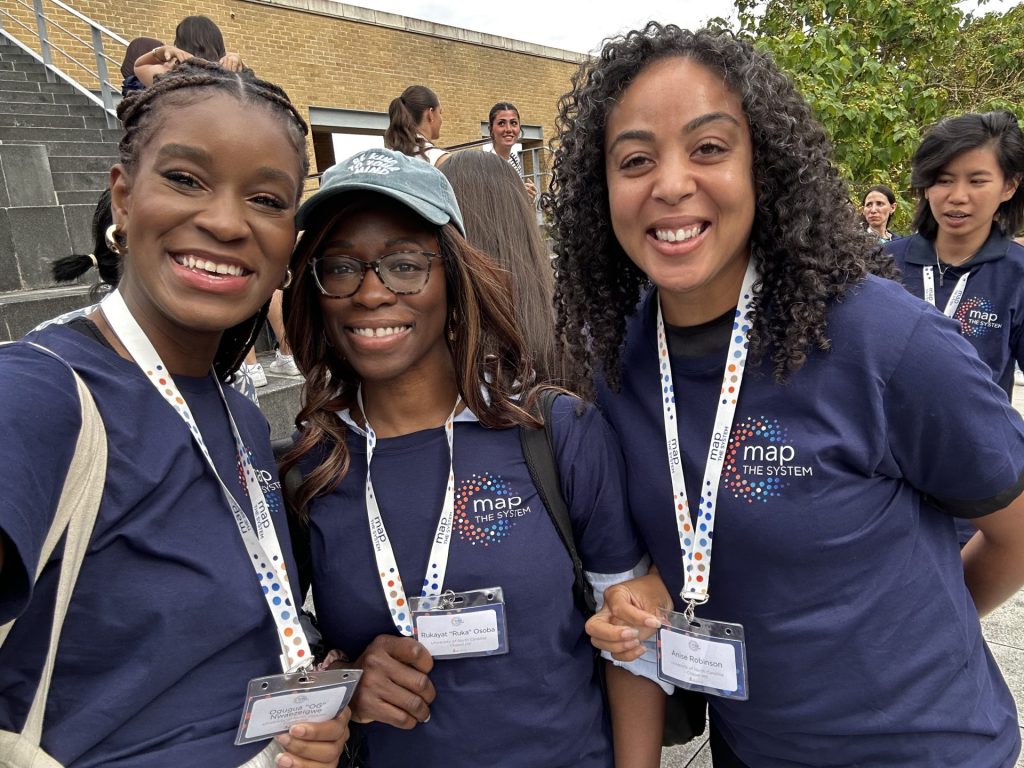
The system thinking process involves researching many problems and factors that lead into a larger societal issue, Robinson explained. “The goal of the program is for students to apply systems thinking methodology to research an issue they are passionate about. Using systems thinking as a tool helps students to focus on fully understanding a problem, before leaping into solutions. This is a skill that they can use not just in the Map the System program, but throughout the future endeavors.”
Map the System allows students to learn about issues happening in other areas of the world from people with lived experience. “Another benefit is to learn about societal issues impacting other regions of the world,” Robinson said. Students travel from Asia, the U.S., South America and Europe to compete in Oxford.
The 1789 Hub partners with Innovate Carolina, Oxford’s Saïd Business School, Honors Carolina and the UNC Gillings School of Public Health for Map the System. Each UNC student team has the ability to meet with systems thinking experts and mentors, as well as receive support from former Map the System competitors.

UNC-Chapel Hill Master of Educational Innovation, Technology, and Entrepreneurship students Ruka Osoba and Ogugua Nwaezeigwe were selected to represent Carolina in this year’s Map the System competition. Nwaezeigwe said their project focused on teacher retention and the underlying reasons educators are leaving the profession in the U.S.
Learning systems thinking changed the way both Nwaezeigwe and Osoba view societal issues now. “Everything is interconnected, and there are so many factors that play into social issues,” Osoba said. “It’s easy to just throw money at an issue when really you need to take a step back and use systems thinking to find the solution you’re missing.”
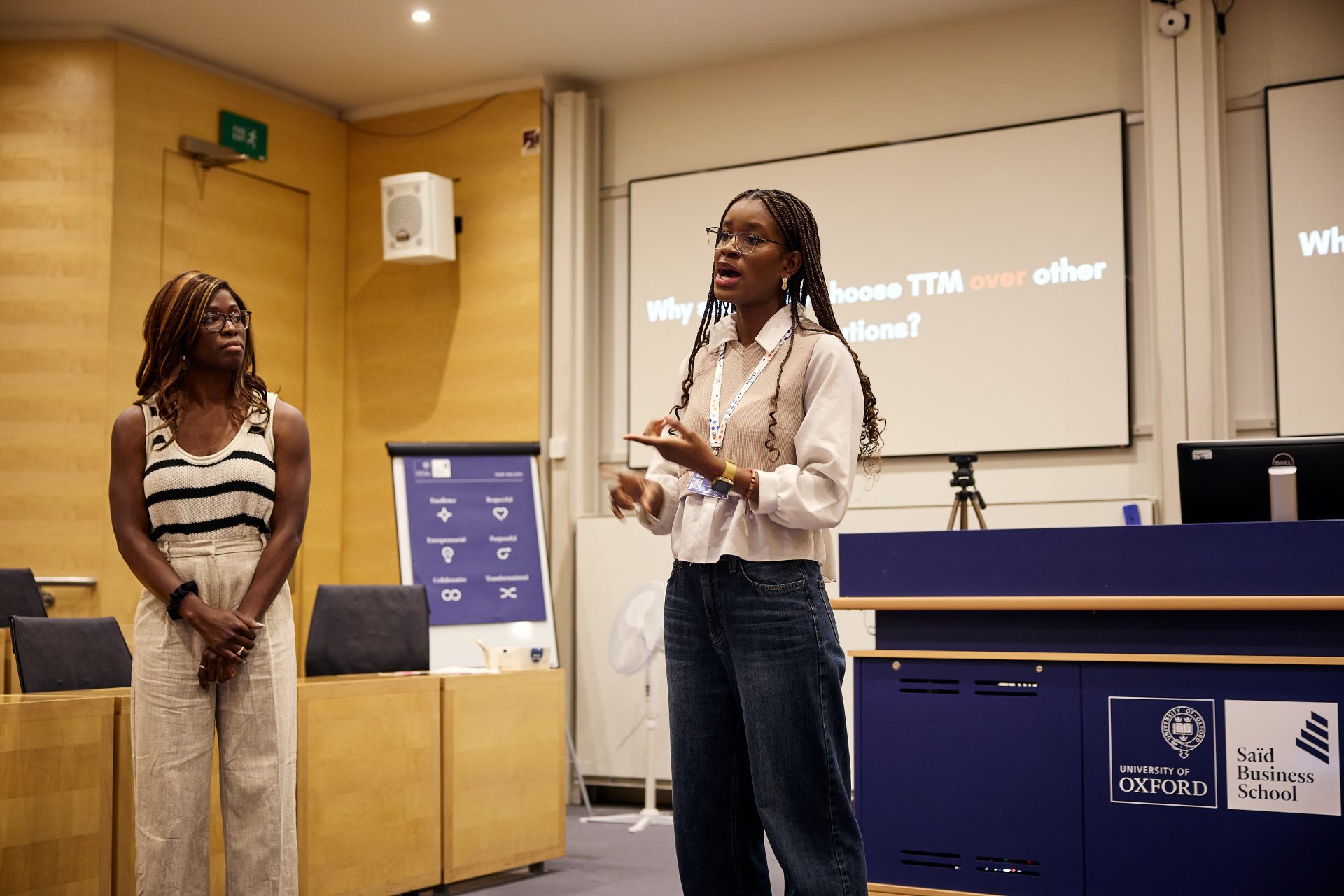

Nwaezeigwe and Osoba were one of the 48 teams chosen to travel to Oxford out of 1,700 teams worldwide. The teams were participating to learn more about their focal issue and how to bring about sustainable change rather than compete, Nwaezeigwe said.
Osoba said she initially felt anxious about representing Carolina. In the end, she felt rewarded that they were able to share their message and raise awareness that teacher retention is a crisis.
By competing in Map the System, UNC students gained the chance to see their research resonate far beyond Chapel Hill. They left feeling empowered by the number of people worldwide trying to solve complex problems with a system thinking model.
 | UNC-CH