Every year, approximately 4,000 preventable surgical errors put patients in the U.S at risk. A startup company affiliated with the University of North Carolina at Chapel Hill is using immersive virtual reality (VR) training simulations of operating rooms and other high-stakes settings to improve teamwork, curb physician and nurse burnout, and keep patients safer.

Beep…beep…beep. A slow, steady heartbeat registers on an EKG machine. The scene fades in from above. A patient rests on the operating table. The attending physician calmly asks his surgical assistant to “finish up” as he steps away to attend to another case across the hall. All seems well. But moments later, a traveling nurse steps in to assist with a surgical drain, which begins to overfill rapidly. The pulse accelerates. Beep. Beep. Beep. A second nurse: “Can we get a pulse check? We need some help in here.” A medical resident notices that the operating room isn’t equipped with blood supply. Announcement: code blue. The team moves frantically. Chest compressions followed by a flat line. A voice announces, “Time of death, 14:05.” Cut to a new scene: a woman sitting on a curb, answering her phone, confused and distraught. ”I’m sorry, what? Complications?”
What sounds like the trailer for a TV medical drama on Netflix or Hulu represents something far more consequential for real medical professionals: immersive virtual reality (VR) training developed by UNC-affiliated startup MaiaZura. The interactive platform places physicians, nurses and other medical staff into true-to-life simulations of medical environments where they and their teams can spot opportunities to improve communication, culture, leadership, efficiency and reliability. The ultimate goal? Helping health care organizations reduce clinician burnout, improve teamwork, and elevate patient safety.
The challenges that MaiaZura seeks to address are anything but made-for-TV fiction. Research indicates that nearly 70% of health care errors are directly linked to poor teamwork and communication. In 2024, Medscape reported that nearly half of physicians said they were burned out, with 20% feeling depressed. Approximately 40% of nurses intend to leave the profession within the next five years, driven primarily by burnout, stress, and labor shortages. Beyond the human toll on patients and providers, expenses run deep. It costs approximately $500,000 to replace a single physician, while the costs of medical errors reach tens of billions of dollars annually.
Such issues may be preventable, says Lukasz Mazur, PhD, Professor of Radiation Oncology and Information and Library Science and Director of Division of Healthcare Engineering at the UNC School of Medicine and UNC School of Information and Library Science. Mazur, who also holds an appointment at the Carolina Health Informatics Program (CHIP) and Gillings School of Global Public Health, is the Founder and CEO of MaiaZura. His research and experience in industrial engineering, human factors, and patient safety give him insight into how mental workload, poor system design, and unclear roles contribute to errors.
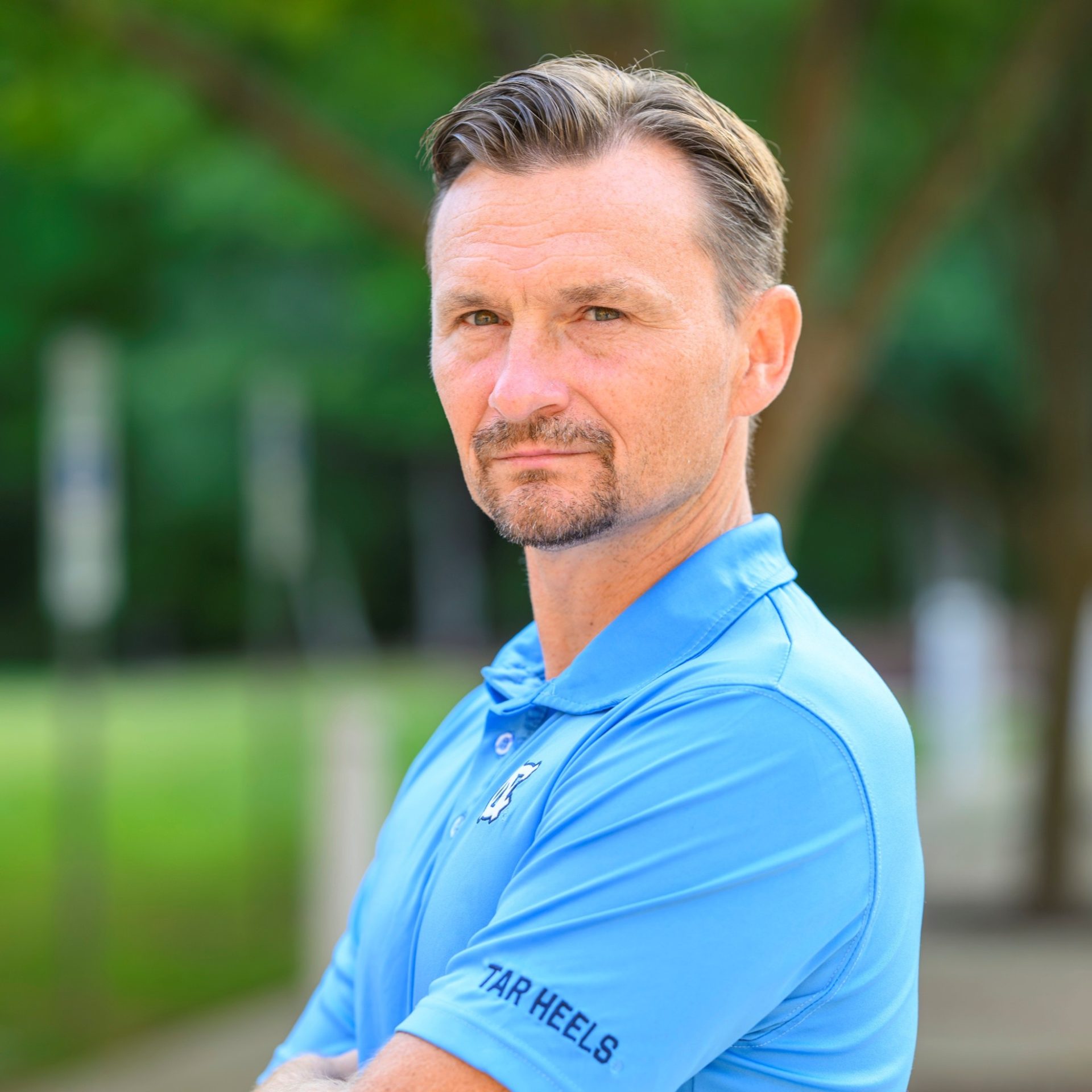

“We don’t have enough doctors, nurses and technicians — particularly in rural areas — and we have to do something to attract people to these professions,” said Mazur. “But, even if we get people to enter the profession, we cannot continue to burn them out. It’s simply unacceptable that every week physicians and nurses commit suicide caused by burnout, depression, and/or moral injury.”
Mazur said that hospitals and health systems looking for answers to high burnout rates, staffing shortages, and subsequent medical errors may benefit from training approaches honed in the high reliability organizations. One key, he said, is immersive training content that emphasizes skills, mindsets and behaviors that are routinely overlooked but which actually activate people to learn.
Traditional health care trainings focus heavily on individual technical skills or performance methodologies, but less on fundamental team-based skills and behaviors. In contrast, MaiaZura focuses on training individuals to acquire these latter skillsets — communication, situational awareness, leadership, team wellbeing, and mutual support — which serve as critical undergirders of support that help medical professionals perform optimally. “We come in with a solution based on knowledge and experience from engineering and industrial settings where training on teamwork and culture has been successful in getting people to engage and understand concepts at different levels,” he said.
While MaiaZura’s approach is grounded in proven evidence-based frameworks and principles, it doesn’t aim to teach the details of any one quality improvement method. Rather, it delivers ready-to-launch content modules that integrate with a hospital’s existing learning management system and training philosophy of choice — Six Sigma, TeamSTEPPS or Lean process principles, for example — to amplify their effectiveness. “There are a variety of tools, concepts and philosophies that hospitals use to train people to become better teams. MaiaZura is the motivational layer that comes underneath those existing training methods and sets the stage for people to open their minds to actually engage with the concepts,” he said.
The company’s signature technology, named Bizon360 Teamwork, replicates high-stakes surgical or other environments in immersive VR: 360° visuals, ambient audio, realistic clinical settings. The company’s production team, which has extensive experience in filmmaking and using VR for storytelling and training, goes onsite at surgical centers, hospitals and in-home environments to meticulously film and record a range of virtual scenarios. Once produced, the training modules place individual learners and teams into these life-like scenarios, where they learn to perform well under pressure.
For instance, Mazur describes a surgery-specific module that immerses learners into the scene of an operating room. Unlike traditional linear training videos, Bizon360 isn’t a passive viewing experience. Learners feel like they’re in the room and part of the team, surrounded by the action, and listening to conversations between the attending physician, resident, nurse and anesthesiologist as they care for the patient, who ultimately dies this scenario.
“We take you through the full experience and all the layers,” said Mazur, who said Bizon360 gives learners the flexibility to train on their computers, tablets, phones or VR headsets. “For example, you can evaluate the policy layer: Did we allow the attending physician to go back and forth operating in two rooms all day long without proper coverage? Did we leave the resident alone in the room at the right time? Did we recognize that one of the nurses was a traveling nurse who is untrained at our facility? Did we recognize that another nurse was having a very difficult day?”
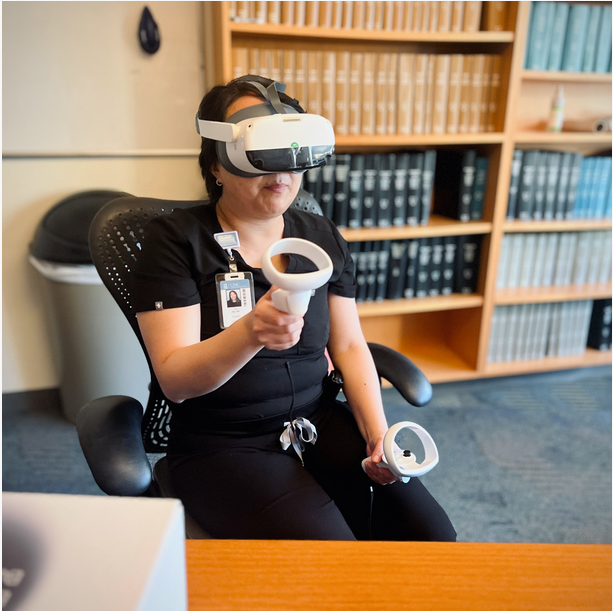
Bizon360 doesn’t stop in the operating room, though. The training also takes learners into the home of the medical resident. It lets them sit at the dinner table with the nurse and her daughters, one of whom makes a comment about her mom’s visible exhaustion: “You’re so busy lately, just working all the time.” Participants listen in when a family member picks up the phone to learn their loved one died during surgery.
“Our training tells you the whole story about why the tragedy occurred, even though no one in the situation wanted or expected it to happen,” said Mazur, noting that trainees often become emotional. “We get you to think about how you can be a leader beyond the bedside and surgical room. How can you encourage teamwork? What can you do at the policy level? What can you do to improve patient engagement?”
Teams that train with Bizon360 can improve their communication, situational awareness, leadership, and mutual support — all leading to fewer errors, improved reliability, and a better culture, said Mazur. As evidence, he points to the team’s rigorous research and pilot study published in 2025. Results from the study showed that surgeons who participated in MaiaZura’s immersive training for 30 minutes demonstrated statistically significant improvements in 90 percent of observed safety behaviors.
Part of the mission, Mazur said, is changing the common perception of training as an annual go-through-the-motions, check-the-box chore. MaiaZura seeks to break the monotony of static slides and canned videos. “Our approach is different because it’s immersive and creates empathy from different perspectives, which activates people to learn,” said Mazur. “In our training, you can move around the screen and choose to be any person you want. If you want to be the attending physician or nurse, you get the perspective of the physician or nurse. If you want to be a patient, you’ll see the whole thing from patient’s perspective. This immersion captures peoples’ hearts and minds and motivates them to learn.”
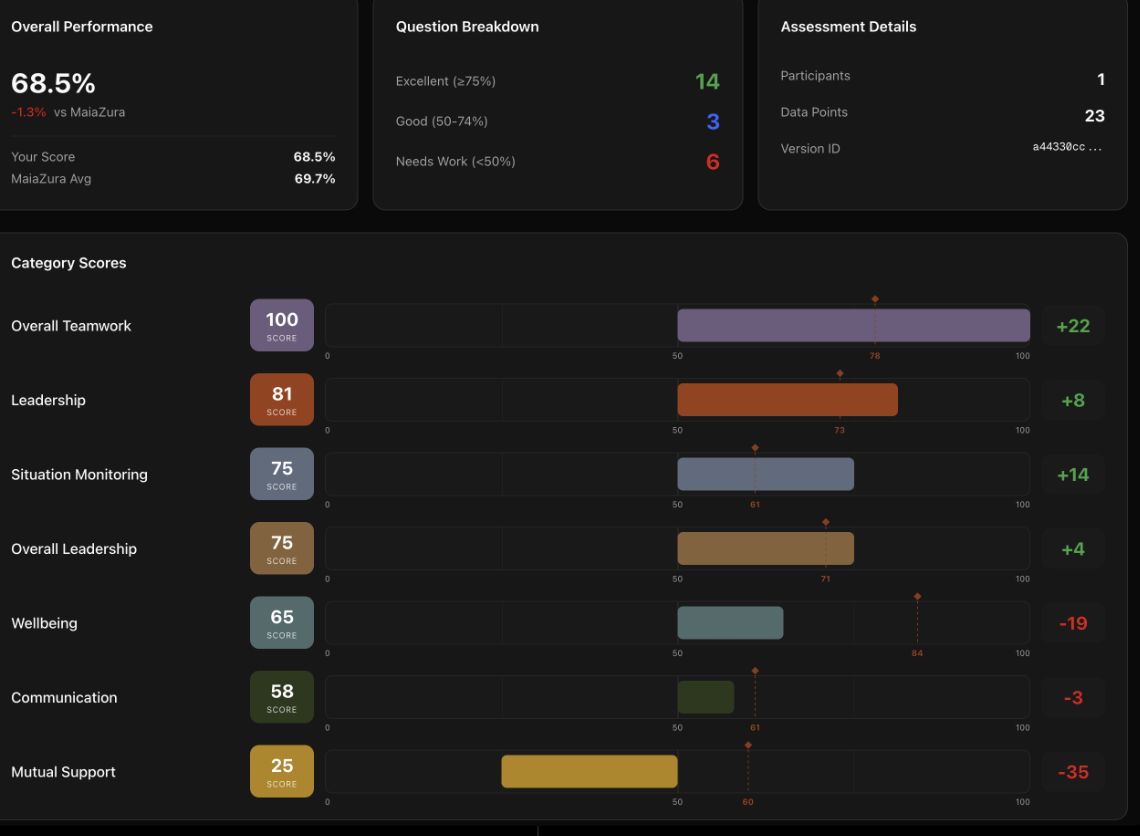
Beyond training modules, MaiaZura offers an online benchmark assessment tool. Using the tool, individual clinicians and health care organizations can take a quick, five-minute evidence-based survey, instantly compare their results against a national dataset of health care peers, and get insights on their strengths and weaknesses across several dimensions of teamwork and organizational culture.
For Mazur, becoming a company founder hasn’t been an instantaneous jump. It’s a well-studied journey. After nearly five years traveling across North Carolina working for Industry Expansion Solutions at NC State University, he was recruited to the UNC School of Medicine in 2011 by Dr. Lawrence Marks, the Sidney K. Simon Distinguished Professor of Oncology Research. Dr. Marks wanted Mazur to use an industrial engineering perspective to help make clinical practices safer and more reliable. “Dr. Marks took me under his wings and showed me how health care works at the leadership level,” Mazur said. “His mentorship helped me understand the many nuanced layers of health care, not just as a researcher, but as a practitioner.”
One of Mazur’s first steps toward practical application occurred in 2018 when he attended the Faculty Innovation Workshop hosted by Innovate Carolina, where he pitched his early concept for health care process improvement. In 2022, the UNC Center for Health Innovation provided Mazur and Dr. Jin Ra, a Professor of Surgery at the UNC School of Medicine and Associate Chair for Quality and Safety in the Department of Surgery, with an Innovation Pilot Award. The Pilot Award was critical early funding that helped Mazur, Ra and their team better understand the contributing factors behind patient safety events and get started with the VR-based training model. Mazur said that the innovation and product wouldn’t be possible without two key members of the MaiaZura team, namely Shawna Buchanan and Christi Fenison, “two extremely talented individuals who brought the necessary skills to develop and produce the Bizon360 Teamwork module.”
As the idea matured, Mazur worked closely with Innovate Carolina to pursue the best go-to-market path and launch the company. He cites support from Innovate Carolina’s market research and competitive intelligence service team and its KickStart Venture Services team. In 2024, KickStart selected MaiaZura to pitch during Triangle Venture Day, an investor-focused event that the team co-organizes annually, and provided the company with a KickStart Commercialization Grant Award to support further product development. Mazur also participated in one of the Triangle Startup Bootcamps organized by KickStart and regional partners to equip faculty and early-stage ventures with tools to launch and build traction.
“Creating and growing our company wouldn’t happen without the support I received from the UNC Center for Health Innovation and Innovate Carolina’s commercialization and KickStart teams,” said Mazur, who described working closely with Dean Stell, Associate Director of Innovate Carolina’s Office of Technology Commercialization, to navigate intellectual property management and the licensing process. “Dean has been a mentor on commercialization and was instrumental in structuring the licensing deal with UNC. Through all the conversations and the amount of time he spent working with our company, I felt like he was really there for me.”
Stell sees great potential for Mazur and the MaiaZura team to make an impact. “It’s gratifying and exciting to work with someone like Lukasz, who is both an expert in his research field and also demonstrates great passion and resolve for taking a research-based technology to market,” said Stell. “MaiaZura has a talented, inventive team whose innovative approach to training can prime the learning potential of health care providers and ensure the care patients receive is safer and more reliable.”
Looking forward, Mazur says the company will partner with professional associations that provide continuing education, while working directly with health systems to deliver consistent, ongoing training. MaiaZura also has near-term plans to raise a seed/pre-seed funding round, Mazur noted. He said the industry’s horizon is what he had in mind when creating the company’s logo, a bison. “The health care workforce is facing a storm,” he said. “So, we chose a bison to represent our brand because it the only herd animal that turns to face a big winter storm when it blows in. They walk through the storm together because they know it’s the shortest way out.”
 | UNC-CH