A three-week, student-focused accelerator at the Innovate Carolina Junction hub in downtown Chapel Hill turned raw ideas—pitched by founders ranging from high schoolers to doctoral students—into ventures with patents pending, clinical studies and paying customers.
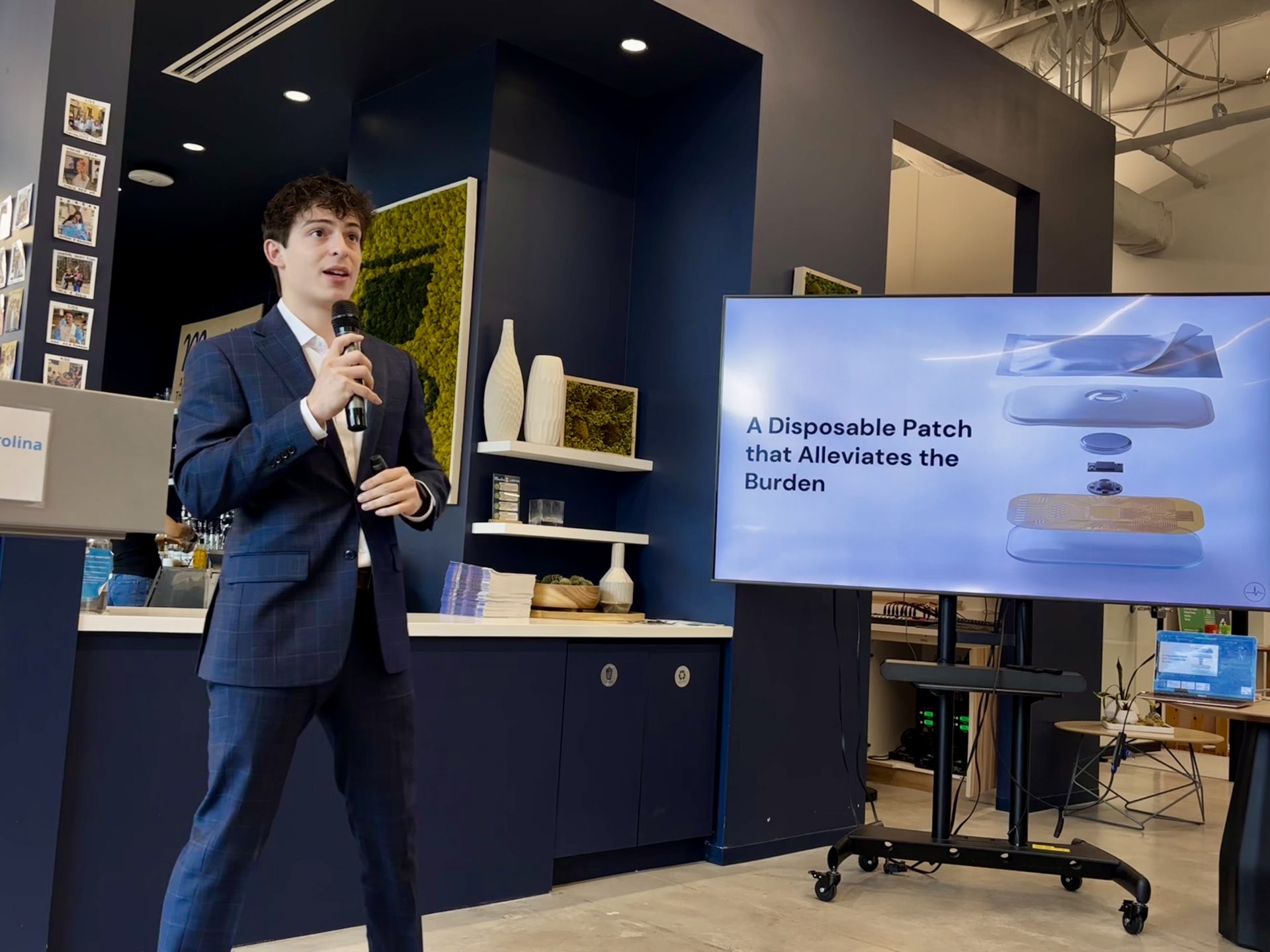
It was past 9 p.m. the night before Launch Chapel Hill’s Demo Day, and the lights at the Innovate Carolina Junction were still on. Joel Tapper, an undergraduate student at the University of North Carolina at Chapel Hill and founder of ARGOS Biosystems, had stopped in to squeeze a few more hours of work from the evening before he pitched. He was not alone. Emil Runge, the director of Launch Chapel Hill, was still at his desk.
“I showed up yesterday at 9:10 p.m. and Emil’s light was still on. I told him to go home,” Tapper told the room the next afternoon. “He ended up spending 45 minutes to an hour helping me get some work done. That shows how much he cares about this program and the students he works with.”
That unscheduled, after-hours coaching session is the quiet engine behind the Launch Chapel Hill Student Summer Accelerator. The program does not sell a stage or a slide template. It offers proximity: to mentors who stay late, to a community of founders pushing one another, and to an ecosystem built to take a student’s idea seriously.
Many student ideas surface in a dorm-room conversation or a class project and then stall. The stagnation doesn’t signify a lack of ambition but the absence of an on-ramp: somewhere to test an assumption, a mentor who has done it before, a deadline that forces a decision. The Launch Chapel Hill Student Summer Accelerator exists to close that gap. Now wrapping up its second cohort of 2026, the program compresses the messy early work of company-building into a structured, high-intensity sprint. It surrounds student founders with the people and feedback that turn a hunch into a venture.
Launch Chapel Hill itself reflects that community-first idea. It is an accelerator formed through a partnership between UNC-Chapel Hill and the Town of Chapel Hill, built to seed local ventures and keep their talent close to home. The appeal runs in three directions at once. For students, the program is proof that you don’t need to wait, or to be a faculty member with a lab, to pursue a company. For industry, the cohort is a preview of regional innovation talent already tackling real problems in healthcare, energy and AI. And for the University and the region, each venture is an early seed of economic development. According to Innovate Carolina’s innovation impact report, since its founding in 2013, Launch Chapel Hill has supported more than 250 total companies, which raised a cumulative $134.5 million in funding during fiscal year 2025. Its 119 active companies generated $95.2 million in revenue and 5,500 jobs during the same year.
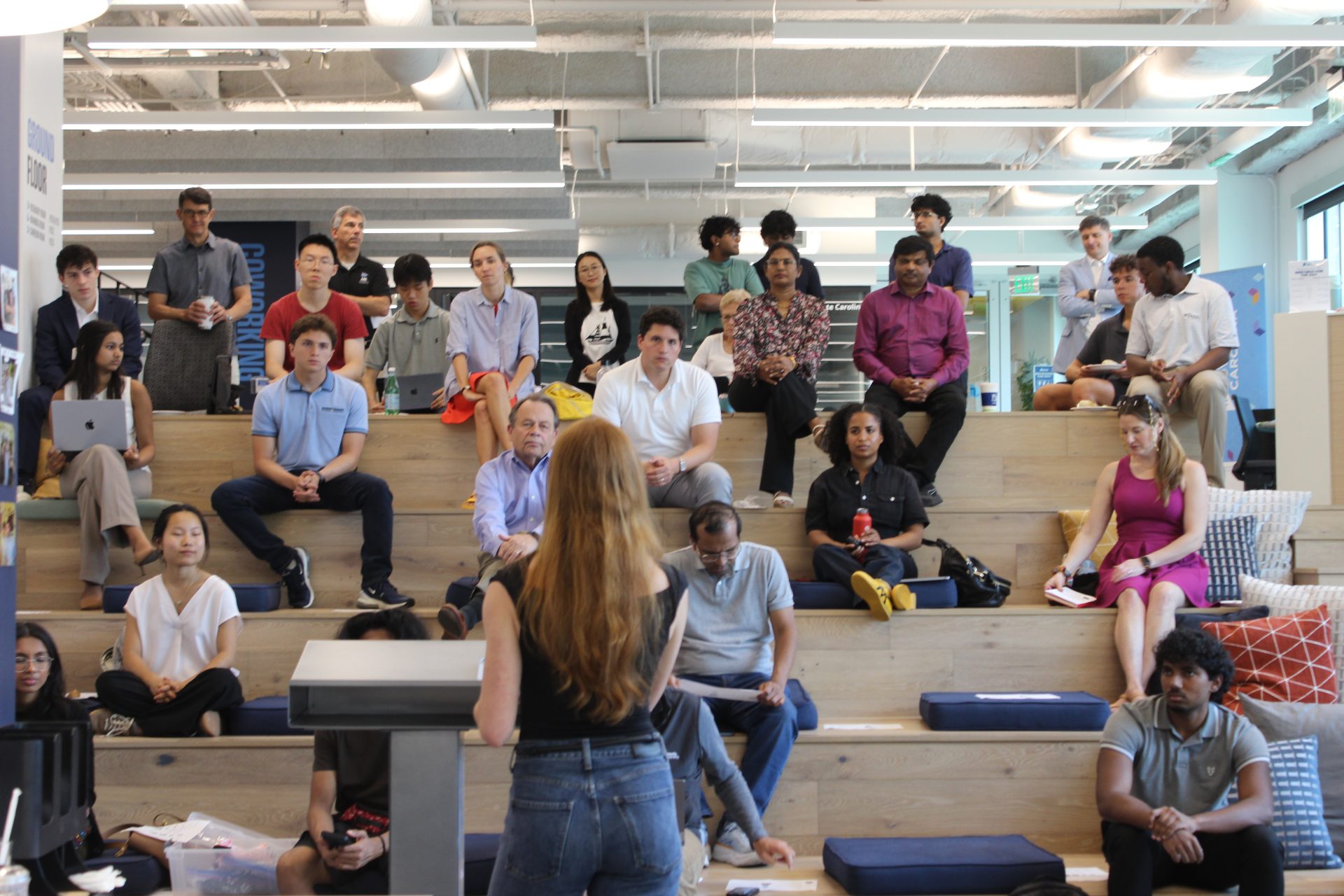
“We’ve got a whole host of different ideas and different industries and different people, and that’s what makes this cohort amazing,” said Naomi Burns, program manager at Launch Chapel Hill and Carolina alumna. “They all feed into each other, they grow together throughout the cohort—and they’ve been asking good questions and pushing each other to get to the next step.”
The student accelerator is built for speed. “It’s fast by design: three weeks, three days per week, three hours per day,” Burns said. “The curriculum includes mentors, speakers and panels that gives students the full arc of business building: ideation, building a value proposition, go to market strategy, and pitching.”
Students work alongside peers and coaches, and they are pushed to do the often uncomfortable work of customer discovery. Rather than simply absorbing the curriculum, Burns noted, the founders spent the three weeks making thoughtful pivots and pushing their ideas to the next level. This latest group of student founders worked together throughout June as Launch Chapel Hill’s second student accelerator for summer 2026, following a prior cohort in May.
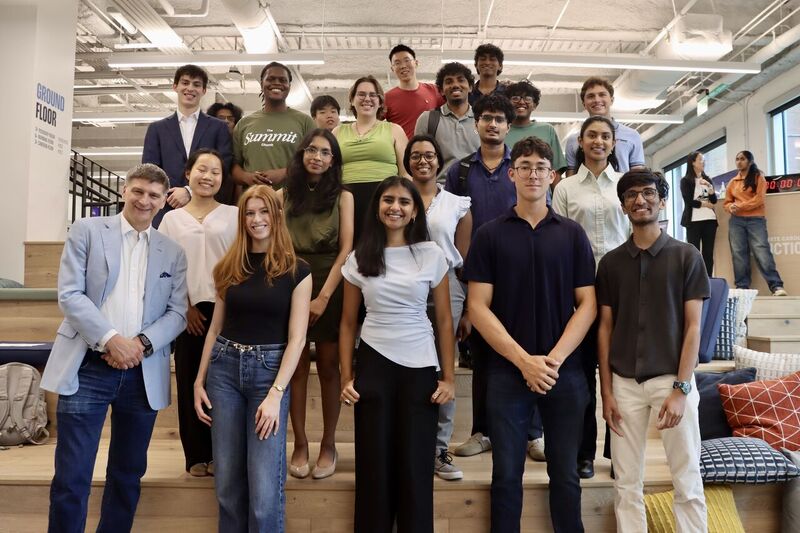
What makes the room unusual is who is in it. This cohort spans the full arc of a research university and beyond, from high school students and incoming first-years who have not yet set foot on campus, to UNC-Chapel Hill and NC State undergraduates, master’s and doctoral students. They work across med-tech, consumer products, B2B software, clean energy and social impact. By design, they feed off one another.
The second 2026 summer cohort included 16 student-founded companies. Twelve of them pitched during Demo Day:
For a three-week program, the cohort’s traction is striking. Many founders aren’t pitching hypotheticals. They’re already in market or lab.
ARGOS Biosystems is pursuing intellectual property and has completed roughly 50 clinician interviews through the National Science Foundation’s I-Corps program. “We’re excited to say that we’re filing our first patent within the end of the week,” said Tapper, the company’s founder and an Honors Carolina student studying public policy and health policy and management.
Keymail launched two and a half weeks prior to Demo Day and already has about 20 real estate agents on its platform. NevoThreads has donated sensory kits to 30 schools across three North Carolina counties, reaching more than 70 students. HoseWEC won funding from the North Carolina Renewable Ocean Energy Program and the U.S. Department of Energy and deployed a scaled prototype in the Currituck Sound.
“We’ve conducted 23 stakeholder interviews. We’ve formed relationships with the UNC radiology department, as well as with UNC sonography instructors,” said Lahari Pokala, an undergraduate biomedical engineering and chemistry student at UNC-Chapel Hill. Pokala is co-founder of Sonara, a startup building a sleeve that makes ultrasound-probe force measurable to help prevent career-ending injuries among sonographers.
The accelerator runs at the Innovate Carolina Junction, the downtown Chapel Hill coworking and innovation hub, with core support from Innovate Carolina and many partners across the regional entrepreneurial ecosystem. For Runge, that web of support, and the community it creates, is the point.
“What we’re building here isn’t any one company, it’s a community,” said Runge. “When a high schooler and a doctoral student are pushing each other to be better founders—and then partners across the entrepreneurial community show up to help them—that’s how you build the next generation of companies in this region.”
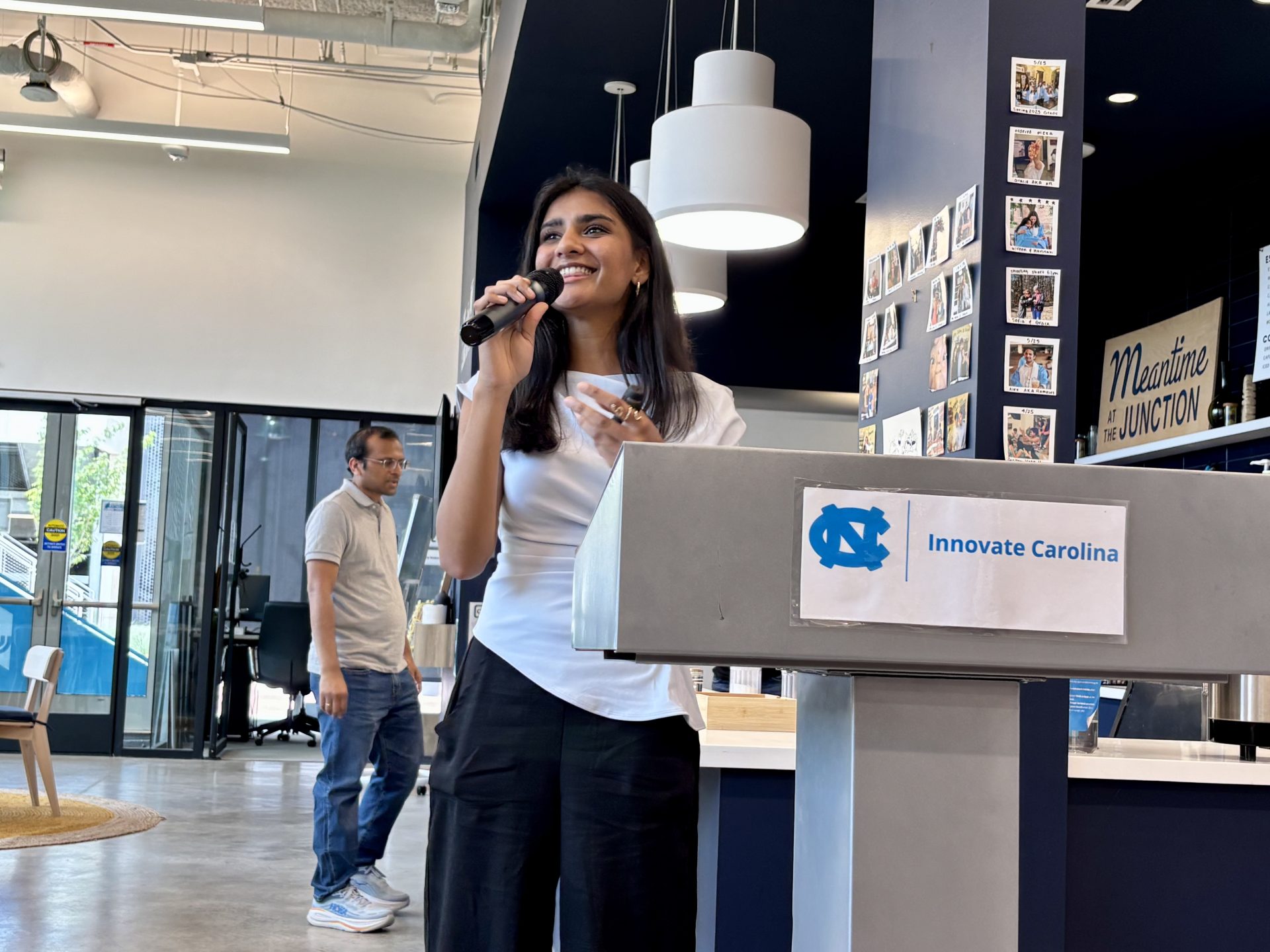
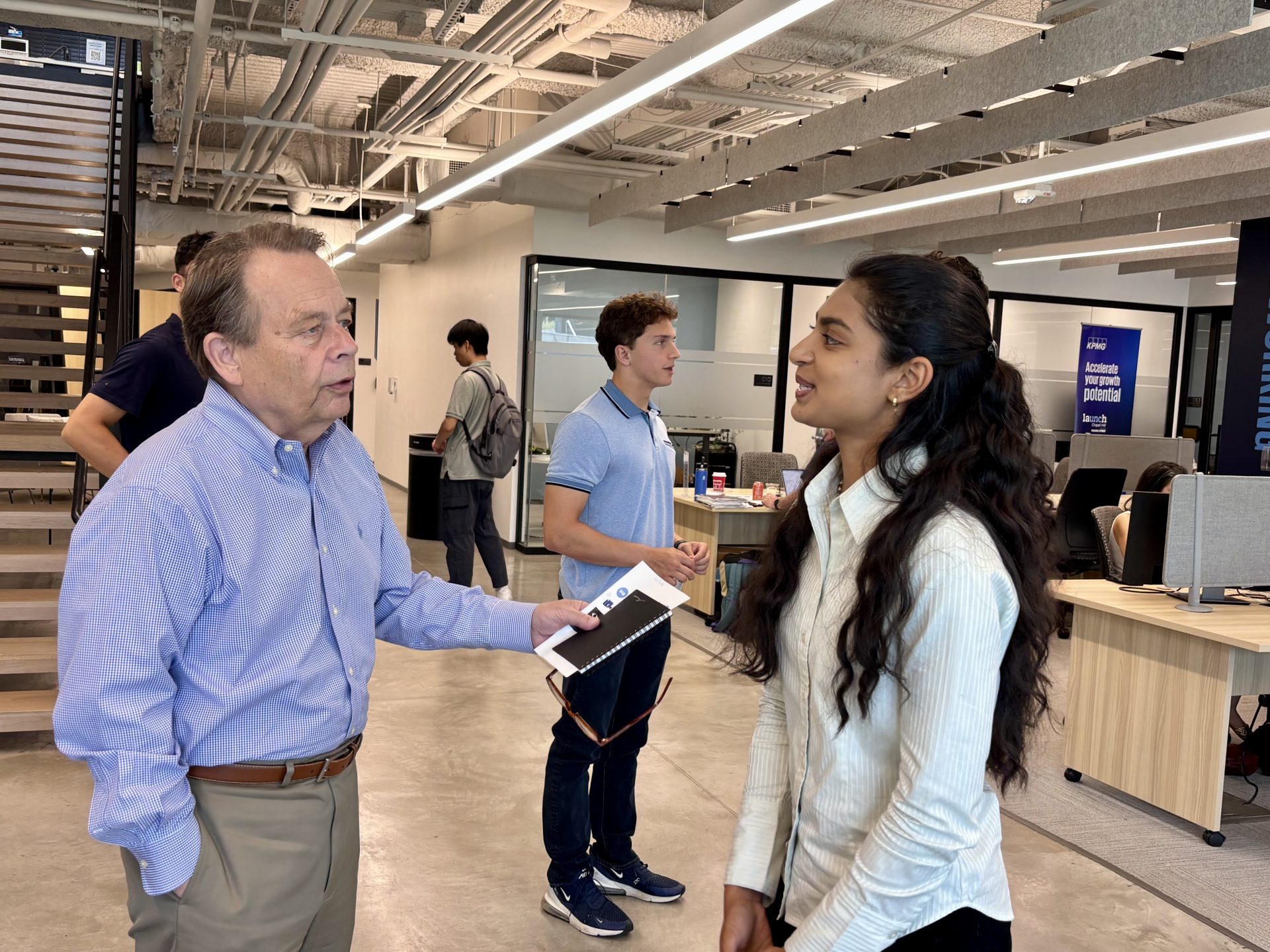
Demo Day is a milestone, not a finish line. Founders left the stage with specific asks: mentors, pilot sites, introductions, early funding. The program’s value hinges on what happens next, the coffee chat that validates a risky assumption, the advisor who joins, or the pilot that becomes a customer. The deeper return is the one Tapper described from the night before: a director who stayed late because the work, and the people doing it, mattered.
“All we ask is for you to think about how you can take part in their journeys and help them take their next steps,” Burns said.
 | UNC-CH