The report, published by the North Carolina Collaboratory and Innovate Carolina’s UNC Institute for Convergent Science, outlines how storage technologies can help North Carolina meet rising energy needs, integrate more renewable energy sources, and maintain grid reliability as the state works toward net-zero emissions by 2050.
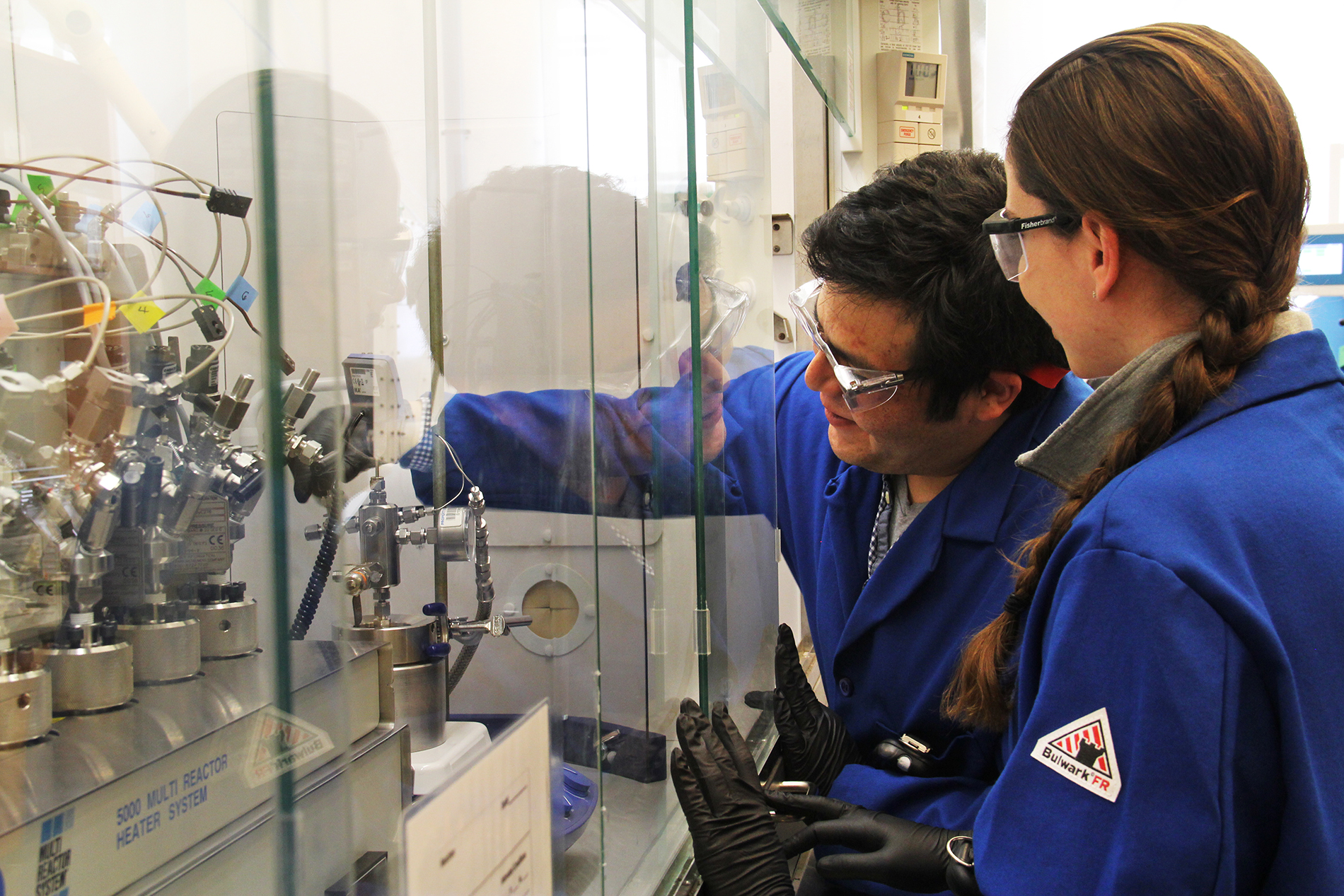
A new report highlights the urgent need for investment in energy storage to support North Carolina’s rapidly changing energy landscape. As the state faces growing electricity demand from population growth and the emergence of new data centers and their accompanying electricity requirements, energy storage offers a practical solution for balancing the grid while advancing energy goals.
The report, Supercharging Energy Storage Innovations in North Carolina, analyzes North Carolina’s energy storage needs and capacity for innovation through research and development in academia and industry. It makes recommendations for practitioners and policymakers that could supercharge advances in energy storage science and technology.
Funded through the Next Generation Energy program and supported by the North Carolina General Assembly, the report was developed by researchers in the Departments of Chemistry and Economics at the University of North Carolina at Chapel Hill.


“Energy storage is the bridge between our current grid and the energy future we envision for North Carolina,” says Gregory P. Copenhaver, Ph.D., Director of the Institute for Convergent Science and Chancellor’s Eminent Professor of Convergent Science at UNC-Chapel Hill. “Advancing energy storage science and new technologies is a win-win. It’s about building a system that works smarter, cleaner and more reliably for everyone.”
The report shows that energy storage technologies—including both short- and long-duration storage—are essential for managing power generated by intermittent sources like wind and solar, ensuring energy can be used when demand is highest.
“This work, and previous research funded by the Collaboratory, clearly shows energy storage being an essential tool for both today’s and tomorrow’s grid,” says Jeffrey Warren, Ph.D., Executive Director, North Carolina Collaboratory. “This report is intended as a strategic road map for policymakers, researchers, and industry leaders to work together to continue building out the requisite energy infrastructure North Carolina to retain its cross-sector economic dominance.”
The report offers five key recommendations to accelerate North Carolina’s transition, aiming to provide opportunities for fueling innovation, gaining energy independence, and training the modern energy workforce to meet a growing job market in North Carolina.
In 2023, the North Carolina General Assembly invested $15 million in the Next Generation Energy program, administered by the North Carolina Collaboratory. The goal is to support university-led research that advances energy technologies and economic development across the state. Supercharging Energy Storage Innovations in North Carolina is one of the first major deliverables funded through this program. It provides sound data, modeling, and recommendations that utility leaders, lawmakers, and energy companies can use when making future decisions.
The report team was led by:
 | UNC-CH