At its annual kickoff dinner, Innovate Carolina’s KickStart Venture Services celebrated a year of startup progress, formally launching a new “bridge” program that rewards founders for hitting real go-to-market milestones sparked by guidance from industry advisors.
A therapy that reverses the debilitating lung scarring of pulmonary fibrosis? Camera-free, energy-efficient eye tracking glasses that help provide insight into neuropsychiatric conditions? Non-addictive pain medications that treat chronic pain without opioids?
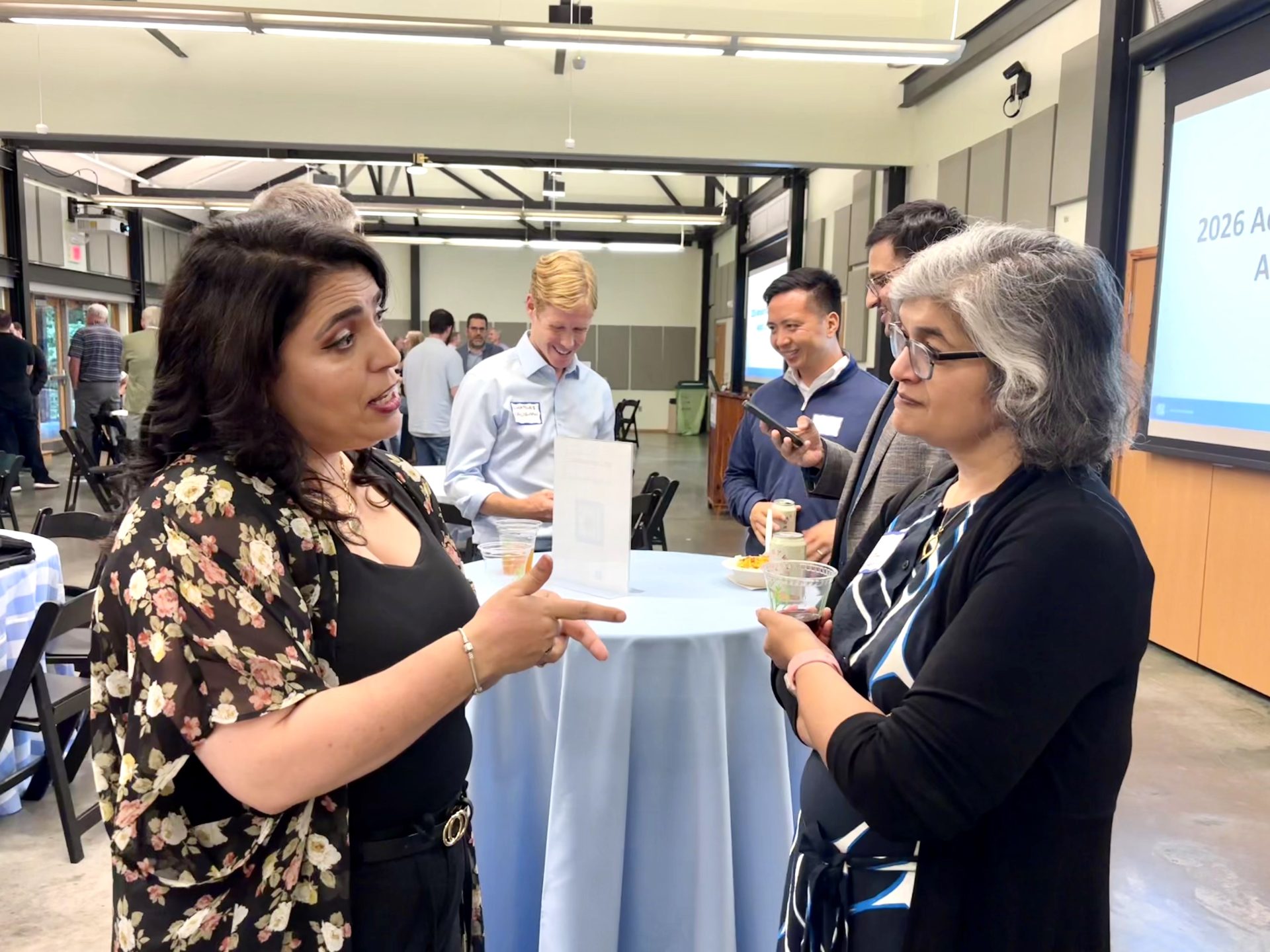
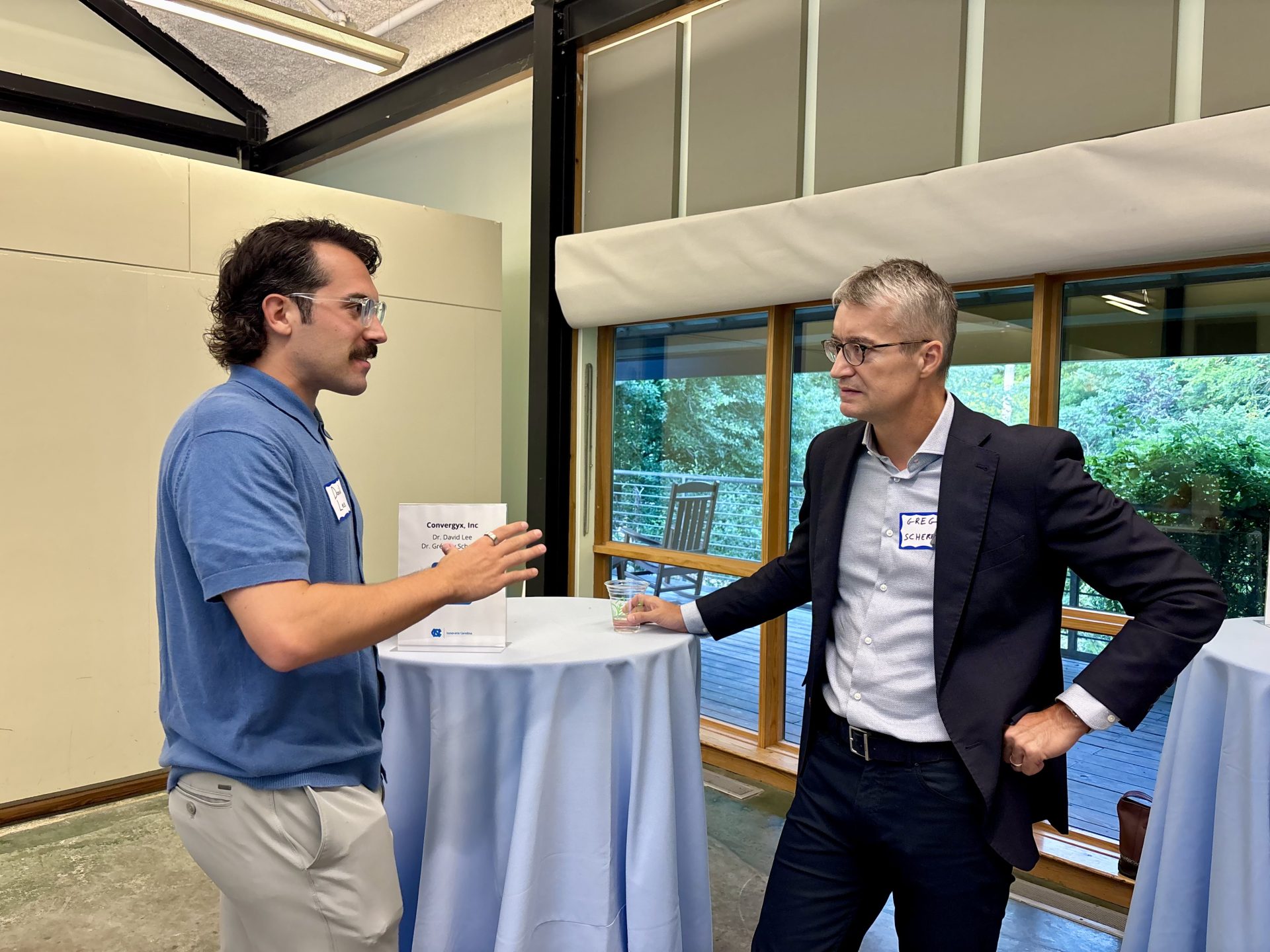
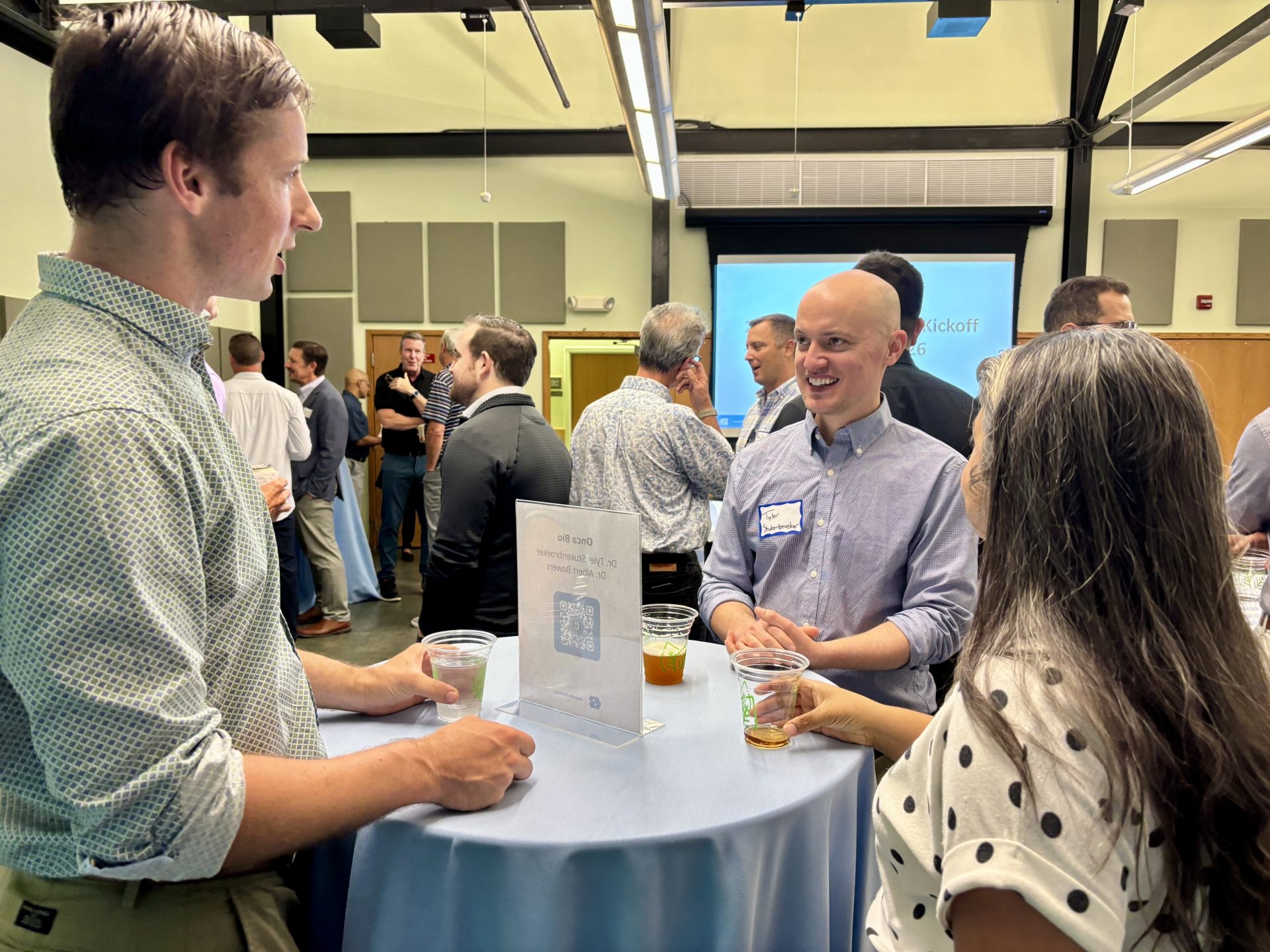
When more than 40 volunteer industry advisors and a room full of UNC scientist-founders met in mid-August for the annual kickoff dinner of the KickStart Advisory Group, the question wasn’t: are these innovations possible?The discussion, rather, focused on the impressive steps UNC-Chapel Hill are taking to bring such innovations to market as real products and startup companies. The evening celebrated seven faculty ventures that presented to the group, setting the table for a productive 2026-27.
Run by the KickStart Venture Services team from Innovate Carolina, the KickStart Advisory Group is a monthly forum that pairs UNC-affiliated startups with seasoned advisors: industry professionals, entrepreneurs, investors and mentors. Each session, from September through April, puts one early-stage venture in front of the board for a 15-minute presentation and a candid Q&A. It’s a non-investment setting. Founders bring a specific challenge: a regulatory question, a product-development hurdle or a partnership need. In return, they get real-time, no-strings feedback. Roughly 15 to 20 advisors attend in person and another 10 to 20 join virtually. The group supports approximately eight Carolina technologies or startups each year.
Faculty entrepreneurs leave sessions better equipped to recruit talent, collaborate with partners, sharpen pitch decks or redirect go-to-market strategies. This year, the group added a new offering: a bridge program, piloted last year, that pairs each presenter with an entrepreneur-in-residence (EIR). Drawing on feedback from the advisory group, the EIR works with the founder to establish concrete business-development milestones, such as strengthening a pitch deck or completing a competitive-landscape analysis and supports progress toward those goals over six months. The program also creates opportunities for advisory group mentors to remain engaged, follow the venture’s progress and provide additional guidance and connections. Startups that achieve their milestones earn a $5,000 microstart grant to support their next steps.
At this year’s kickoff dinner, Tommy Sowers, PhD, Vice Chancellor for Innovation, Entrepreneurship and Economic Development, and Magnus Egerstedt, PhD, Executive Vice Chancellor and Provost, opened the evening by recognizing the faculty founders’ progress and thanking the advisors whose expertise, connections and continued engagement help move promising Carolina innovations toward the marketplace. Their remarks underscored the University’s commitment to supporting faculty entrepreneurship and translating Carolina research into meaningful societal and economic impact.
The kickoff dinner is also a showcase. Participating founders return to give short progress updates that allow advisors to see what became of their advice.
“It’s a joy watching these scientist-entrepreneurs gain real traction and hit so many of their commercialization goals since presenting to the KickStart Advisory Group,” said Mireya McKee, Director of KickStart Venture Services. “None of it happens without our advisors, whose continued generosity, guidance and support make this kind of progress possible.”
Seven faculty ventures presented during the 2025-26 cycle. Here is what they’re building and the biggest strides each made with the board’s help:
For the founders, the progress was personal. Freeman pointed to a year of hard-won validation. “Three drugs are on the market and zero cures — patients die within three to five years — we work to change this,” she said. “Our peptide therapy shows complete clearance of fibrosis, almost like magic. But more so, you see restoration of a healthy lung architecture, which is unheard of. Since I presented to this group, we’ve designated our lead compound and we’re preparing for an FDA meeting.”
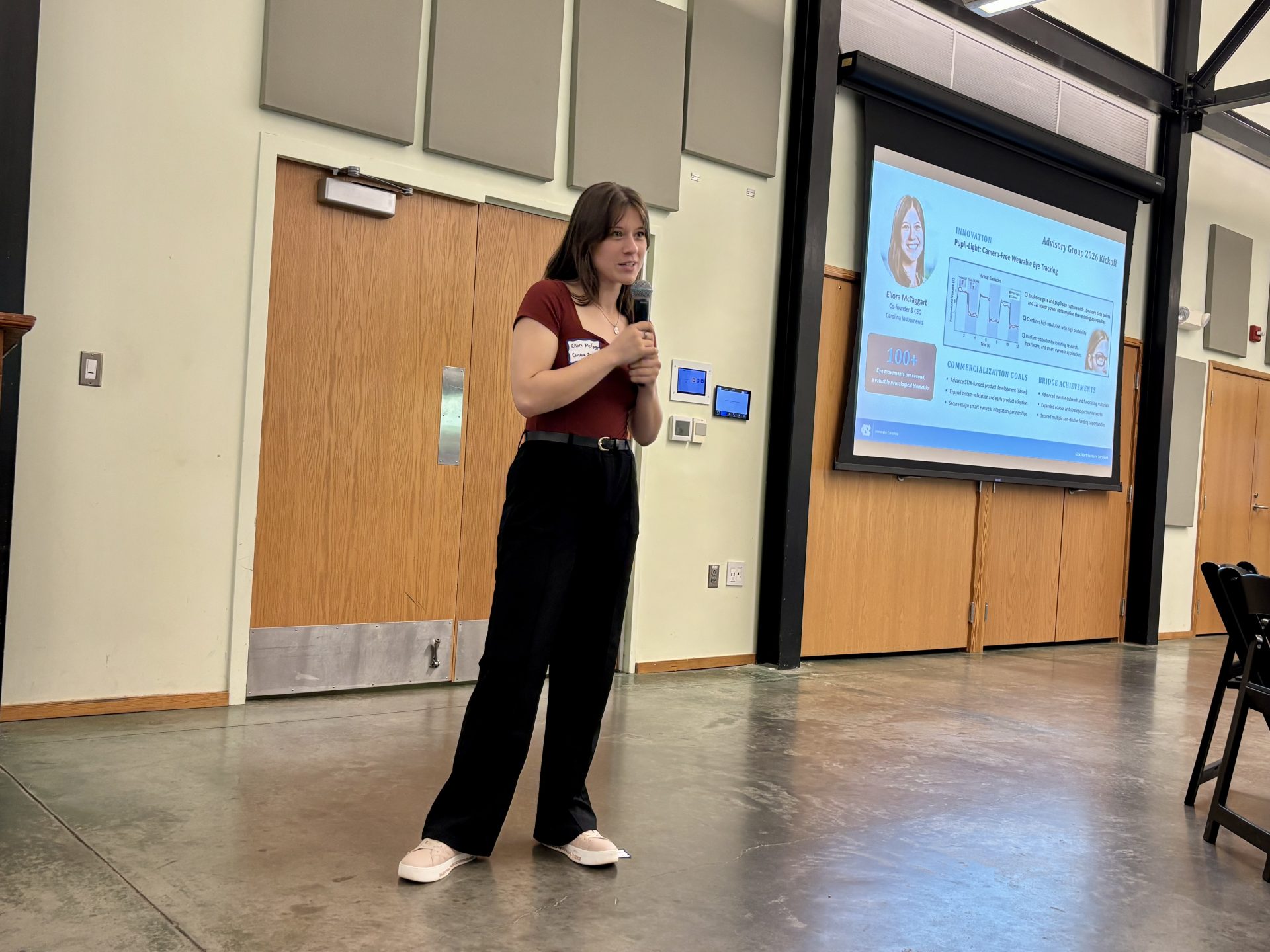
McTaggart credited the board with sharpening her company’s focus. “Presenting our business case to the advisory group was immediately valuable, but I saw even more impact in the conversations that followed,” she said. “Advisors reached out to meet one-one-one, and their experience brought new perspectives that helped us refine our go-to-market plan and think strategically about how to commercialize our technology as effectively as possible.”
The group already has a full slate for 2026-27, with sessions featuring presentations from scientist-entrepreneurs such as Jeffrey Stringer, MD and Srihari Chari (Real OB, Inc.), Jacquelyn Bower, PhD (uveal melanoma gene therapy) and Christina Chatzi (M34), and Joe Hart, PhD (MyoInsight, Inc.).
Serving as an advisor is a volunteer role and the opportunity for entrepreneurial and industry experts to give back to local science-driven ventures at the earliest, most critical stage. The invitation goes beyond feedback: advisors are encouraged to keep opening doors, making introductions and, for those inclined, investing in the founders they meet.
Interested in lending your expertise to the region’s next generation of science founders? KickStart is always welcoming new advisors. Learn more and get involved on the KickStart Advisory Group Meetings page at Innovate Carolina.
 | UNC-CH