A packed session at the Innovate Carolina Junction gave people from UNC-Chapel Hill and the local region the chance to step into the role of an “AI-augmented forward-deployed engineer.” Find out what you need to know about creating your AI competitive advantage, and why some of the most valuable skills are still human ones.
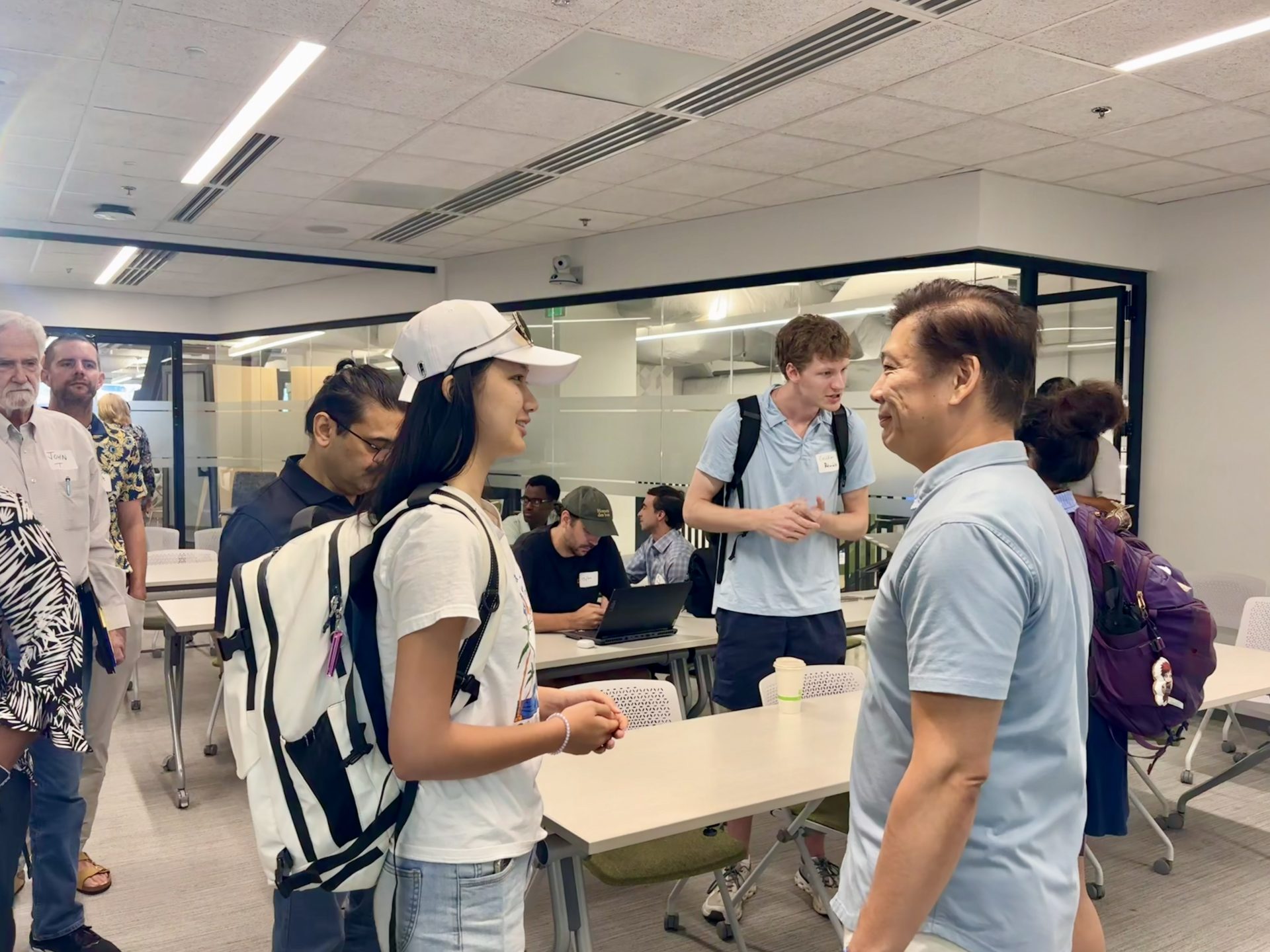
Wondering what it takes to land the hottest job in AI? As students return to campus this fall, UNC-Chapel Hill’s Innovate Carolina team kicked off a new AI workshop series built to give people in the local area a practical jumpstart on the skills reshaping the modern workplace. The session, “Become an AI-Augmented Forward-Deployed Engineer,” drew a full room to the Innovate Carolina Junction, an innovation community and coworking space in downtown Chapel Hill. It offered a hands-on look at what it billed as the hottest job in the industry.
Led by Hao Dinh, a digital-transformation leader with two decades of experience who now focuses on AI education, the interactive 90-minute session invited participants to step into the role of an AI-augmented engineer, work through a real customer problem, and build a working prototype using accessible tools. Dinh emphasized that AI rewards human strengths like problem-solving, communication and curiosity as much as technical expertise. Hosting sessions like this is part of how Innovate Carolina and the Junction serve the region, turning a hub for entrepreneurship and startups into a classroom open to students, researchers, professionals and community members alike.
Here are five takeaways from the workshop that you can use to build a professional advantage with AI:
The workshop is part of a growing slate of practical AI programming from Innovate Carolina, which also hosts a monthly AI Unfiltered coffee and conversation hour and other events meant to demystify the technology that people fear. Patrick Kastian, the assistant director of Data Intelligence Hub at Innovate Carolina who organizes the workshop series and other programs on behalf of the UNC AI Community, said that hands-on, skills-first approach is the point.“Our goal with this series is simple: give people at UNC and across our community practical AI skills they can put to work the very next day,” said Kastian. “Whether you’re a student, a researcher or a mid-career professional, we want you to leave with greater confidence about how to use these tools to be more effective. It’s about seeing AI as something that works for you, not against you.”
Interested in getting involved? Sign up to join the UNC AI Community (open to university and non-university AI enthusiasts). Check the Innovate Carolina Junction site for future workshop and coffee hour sessions. Registration opens soon.
Sept 9. AI Unfiltered (coffee hour)
September 29: Land Your First Fluid-Shaped AI-Ready Role (workshop)
Oct. 7: AI Unfiltered (coffee hour)
Nov. 3: Don’t Let Someone Using AI Take Your Job (workshop)
Nov. 11: AI Unfiltered (coffee hour)
Dec. 1: How to Digitize Your Expert Knowledge (workshop)
Dec. 9: AI Unfiltered (coffee hour)
 | UNC-CH