Krish Vazirani and Aryan Aladar are helping startups solve one of the hardest parts of building a product: getting timely, meaningful feedback from users.
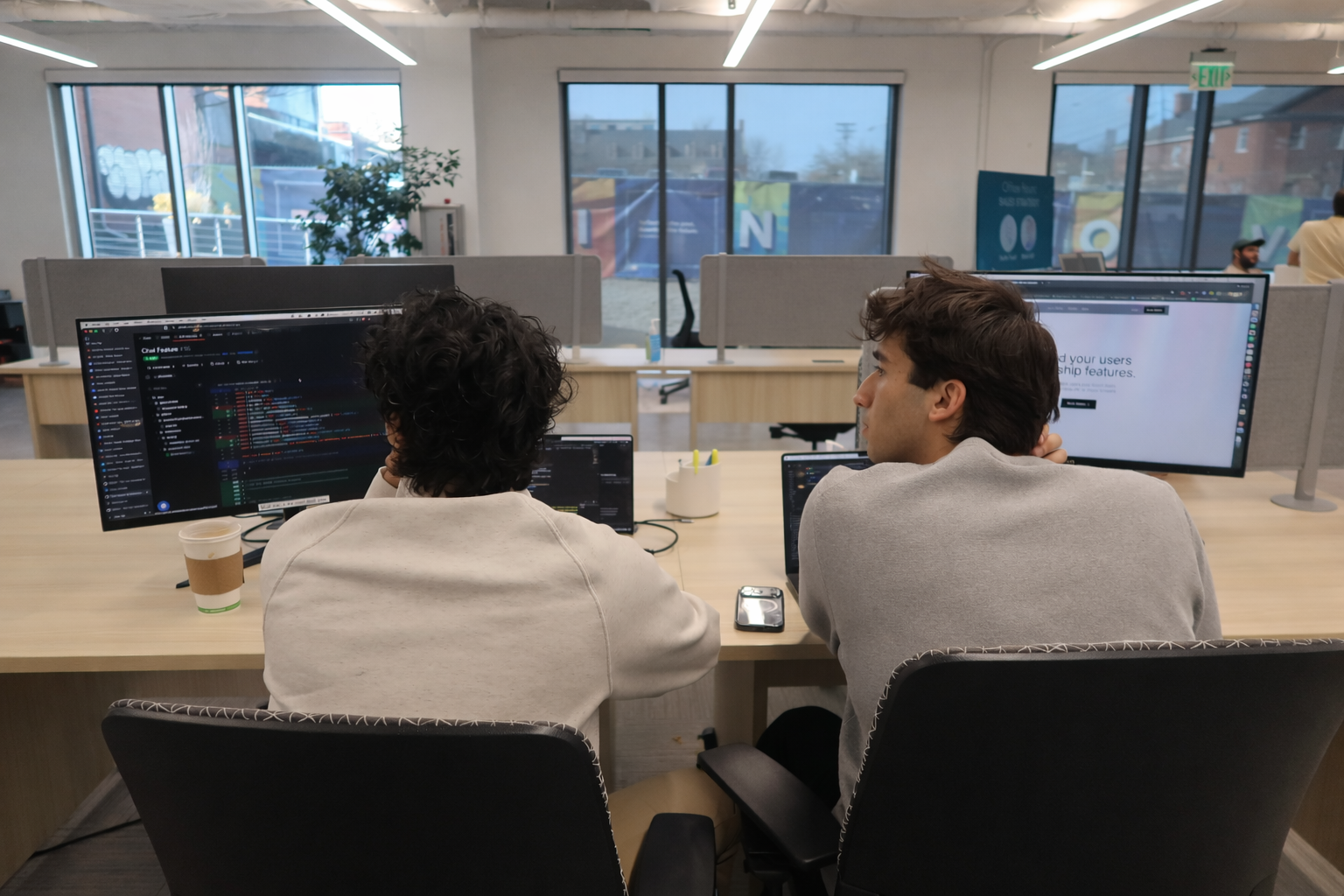
For software engineers and startup founders, building a product is only half the battle. The harder part, and often more time-consuming, is figuring out whether anyone actually wants it.
UNC-Chapel Hill students Krish Vazirani and Aryan Aladar understood this challenge firsthand. Before building their own company, both had worked in different fields developing software, where they spent weeks trying to understand an industry, identify the right target customer and gather meaningful feedback. The process was slow, often repetitive, and rarely definitive.
As Vazirani, Aladar and countless others in the high-tech industry have found, product validation has long been one of the biggest bottlenecks in software development. Teams rely on customer interviews, surveys, and early beta testers to determine whether a product resonates — a process that can take weeks or even months. And even then, feedback can feel limited, inconsistent or difficult to scale.
“It’s hard to get a grasp of customer types when the customers are so busy. Getting customer feedback on your product, or even when you start launching different features, it gets more and more difficult,” said Vazirani. “Over time, we’ve seen that with AI it’s much easier to develop code, but getting user feedback has not changed at all. We thought this was an interesting problem and realized for us to build better and get to market faster, it would be important to get user feedback earlier in the life cycle of building a system.”


Recognizing this timing gap in the user-feedback process, Vazirani and Aladar decided to move quickly and in December 2025 over their winter break, they built the first version of their platform in less than a week. What started as a “lightbulb moment” quickly evolved into something tangible. Today, that idea has grown into Swarm, a UNC-affiliated startup company focused on helping teams simulate customer feedback earlier in the product development process. Within months of launching, the team has already raised more than $100,000 in early funding from Leap Year and Afore Capital.
Soon after moving from the Bay Area to Chapel Hill to pursue a bachelor’s degree in computer science with a minor in entrepreneurship through Carolina’s College of Arts and Sciences, Vazirani heard about the Innovate Carolina Junction through his roommate. In the fall of 2024, he signed up for a free coworking day to “check out the space.” He quickly found himself returning, using the space to bounce ideas off other students, and it was there that he met Aladar.
Vazirani and Aladar quickly became close friends. Both shared a love of the tech world from a young age and had previous experience developing software for real estate and construction companies. That common ground, paired with countless conversations at the Junction, laid the foundation for a true friendship and, eventually, a shared entrepreneurial journey.
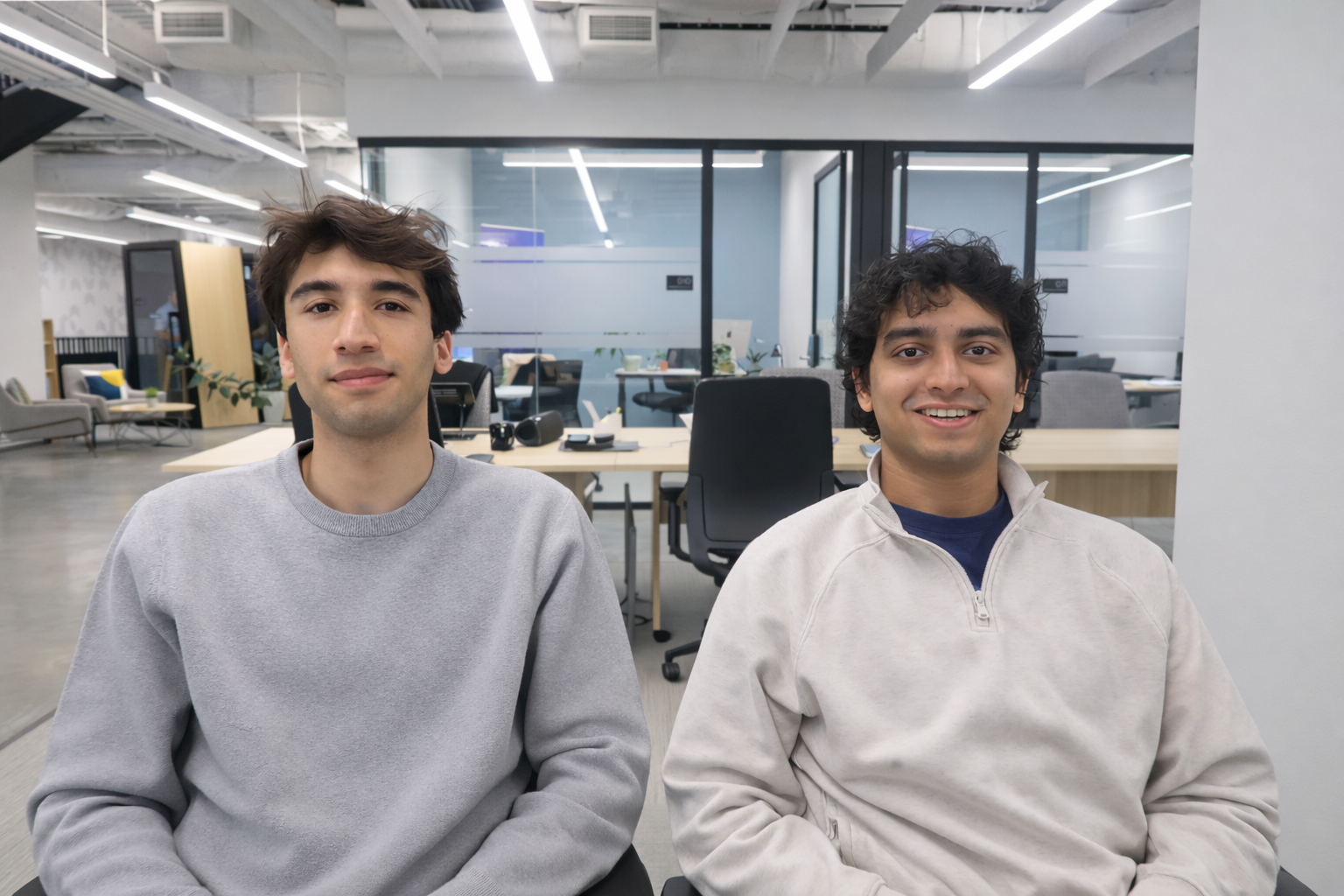
“By December, we had grown closer and recognized we were facing the same core problem—accessing timely user feedback,” said Aladar. “That realization ultimately led us to start Swarm.”
The strength of the Carolina entrepreneurial community also played a role in shaping their early success. From peers at the Junction to mentors and advisors across campus, they found a network willing to offer guidance, test ideas and provide encouragement. Many of their earliest customers are alumni who embraced the duo’s vision, giving Vazirani and Aladar the confidence to iterate quickly and continue growing their startup.
During their time at the Junction, the two also connected with Emil Runge, director of Launch Chapel Hill, a startup accelerator based at the Junction and formed through a partnership between the Town of Chapel Hill and the University. With Runge’s encouragement and support from the broader community, Vazirani and Aladar are preparing to join the spring 2026 cohort, as the first student team for Launch Chapel Hill Powered by KPMG, which begins March 9. The competitive, application-based program supports scalable companies working in areas such as AI, quantum computing, semiconductors, and biotech, and helps founders refine their market strategy, secure early customers, and pursue pilot opportunities through KPMG’s network.
As part of the upcoming Launch cohort, Vazirani and Aladar are offering Swarm to fellow founders in the program. The tool allows teams to simulate customer feedback early in the product development process, helping founders test ideas and features faster. By providing Swarm to the cohort participants, Vazirani and Aladar hope to add value to other startup projects, while simultaneously gathering feedback on their own platform, creating a win-win for all involved.
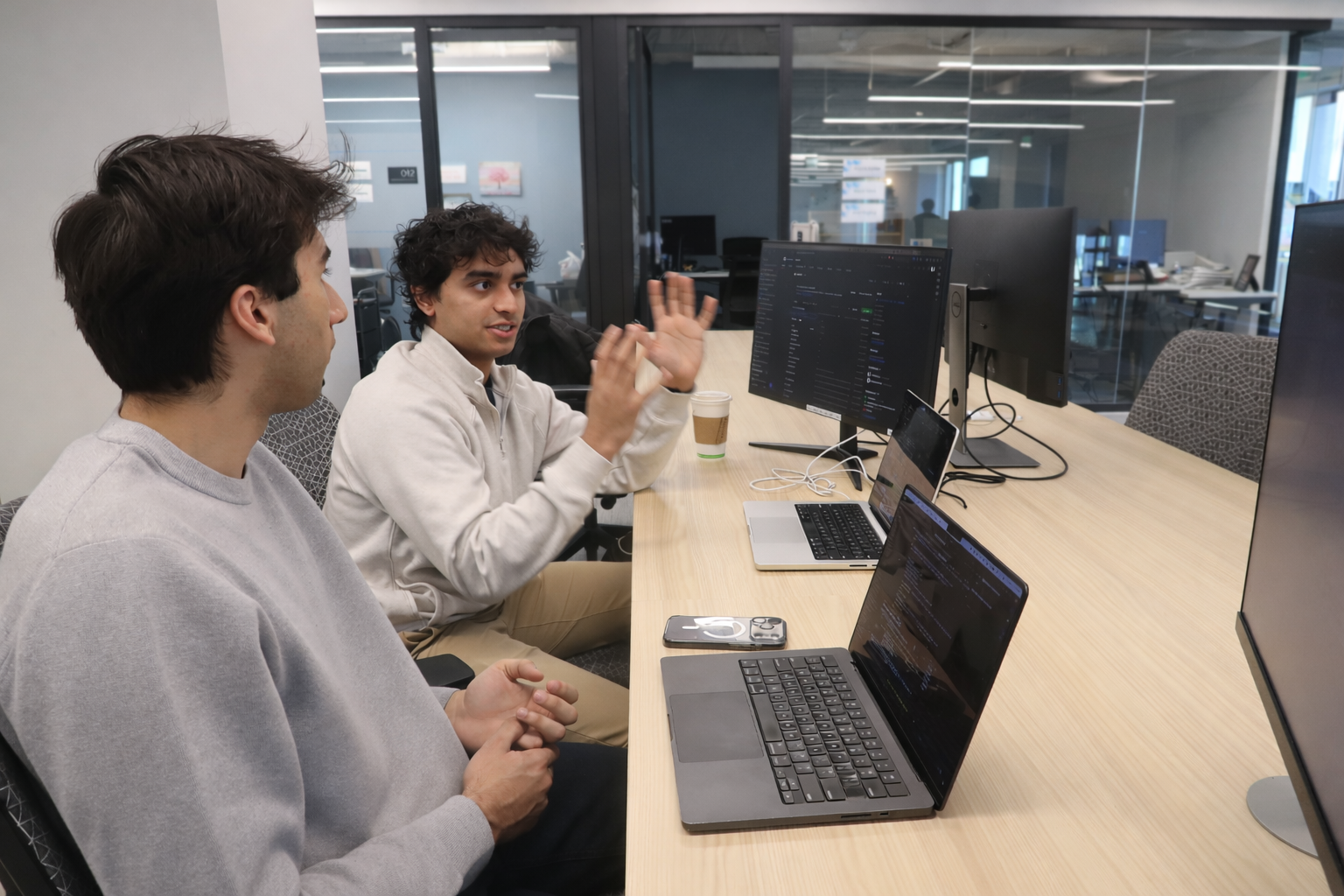
Despite still being early in their own startup journey, the pair are fully committed to making the most of the cohort’s resources. “We’re still figuring things out because we’re so early on, so any help really gets us to the next level,” Vazirani explained. By giving other founders access to Swarm for free, they plan to refine their product in real-world scenarios while supporting the growth of their peers.
Balancing schoolwork, the cohort and a growing startup is no small feat. Their approach reflects a combination of ambition, curiosity and a willingness to learn, qualities that can only continue to help Swarm grow.
 | UNC-CH