IMPEDE, a seven-institution team led by UNC-Chapel Hill with industry partner Siemens Healthineers, aims to deliver an FDA-ready early-detection biomarker and preclinical treatments for Alzheimer’s disease and pulmonary fibrosis in just four years.
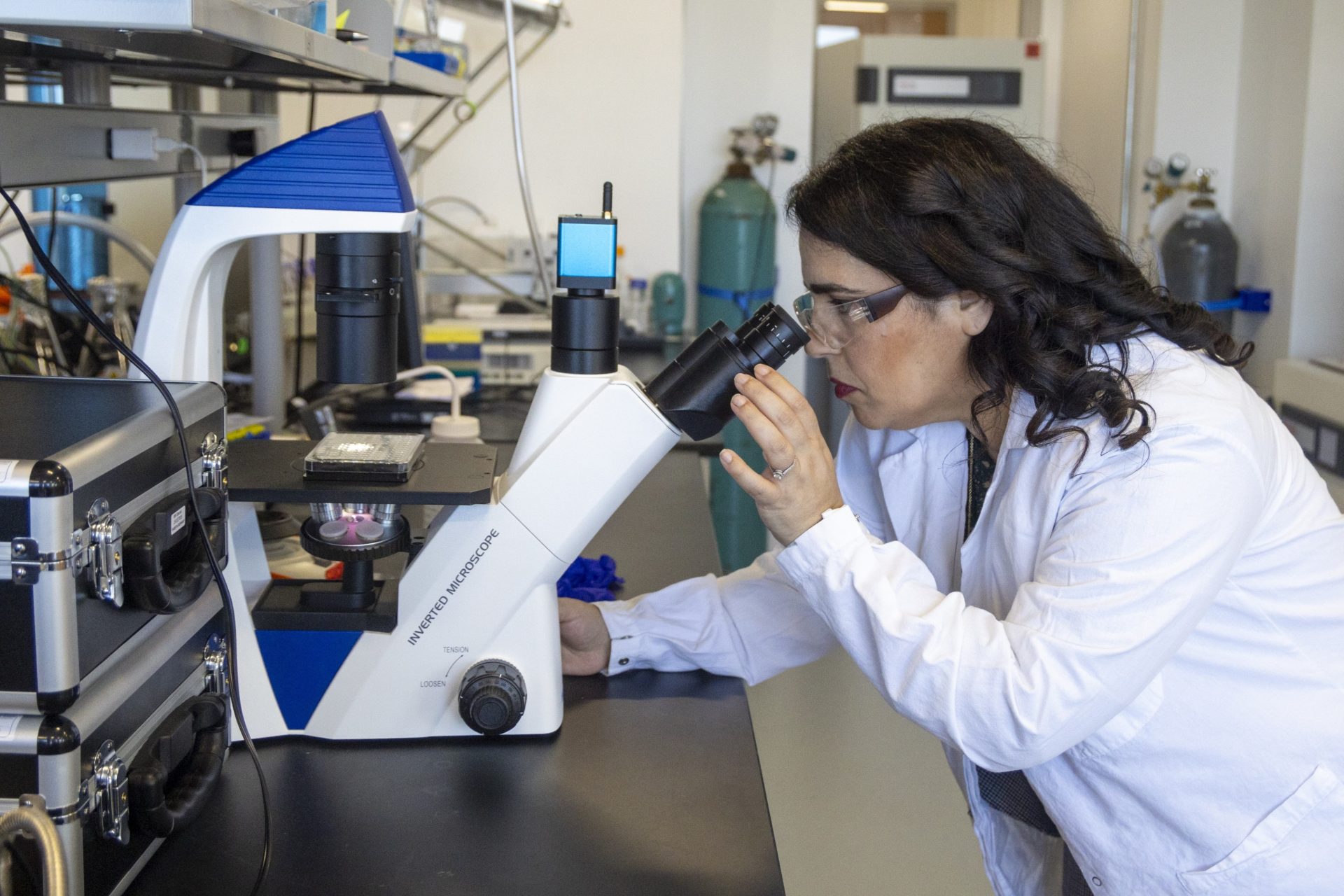
Alzheimer’s disease and pulmonary fibrosis follow a cruel pattern: by the time symptoms appear, significant and permanent damage is already done. A new Carolina-led effort aims to change when the fight begins.
With up to $24.8 million in new federal support, the University of North Carolina at Chapel Hill is leading a research consortium to intercept two of the world’s most devastating diseases, Alzheimer’s and pulmonary fibrosis, at the molecular moment they begin, perhaps long before a patient notices the first symptom.
Funding and significant project management support comes from the Advanced Research Projects Agency for Health (ARPA-H), a research agency within the U.S. Department of Health and Human Services, through its BIOmolecular Grammar for protein Aggregation Modulation and Intervention program, or BIOGAMI. BIOGAMI is led by ARPA-H Program Manager Shannon Greene, PhD. The initiative unites seven universities and industry partner Siemens Healthineers to study the first molecular changes behind a family of illnesses known as protein-misfolding diseases.
Named IMPEDE, short for Instruct and Modulate Protein Ensembles for Disease Evasion, the project sets out to do three things: develop an early-detection biomarker for Alzheimer’s, advance preclinical treatments for both Alzheimer’s and pulmonary fibrosis, and build AI prediction tools that could carry over to other protein-misfolding diseases.
Both diseases remain incurable, and timing is a big part of why. Today’s therapies arrive only after clumps of malformed protein have already caused cellular damage or tissue scarring.
“For a century, we’ve fought these diseases after the damage is done,” said Ronit Freeman, PhD, associate professor of applied physical sciences and pharmacoengineering at UNC-Chapel Hill and lead principal investigator for IMPEDE. “Our team’s focus is about getting there first — finding the earliest signs of trouble and acting before disease ever takes hold. ARPA-H asked for moonshot ideas on an aggressive timeline, and our team answered.”
The trouble starts when certain proteins fold the wrong way and begin sticking together. In the brain, those aggregates appear as the amyloid plaques of Alzheimer’s, and related protein clumps drive Parkinson’s and ALS. The same basic failure occurs in the lungs, the heart and some cancers. In pulmonary fibrosis, it scars the tissue around the lungs’ tiny air sacs, leaving patients short of breath, coughing and fatigued.
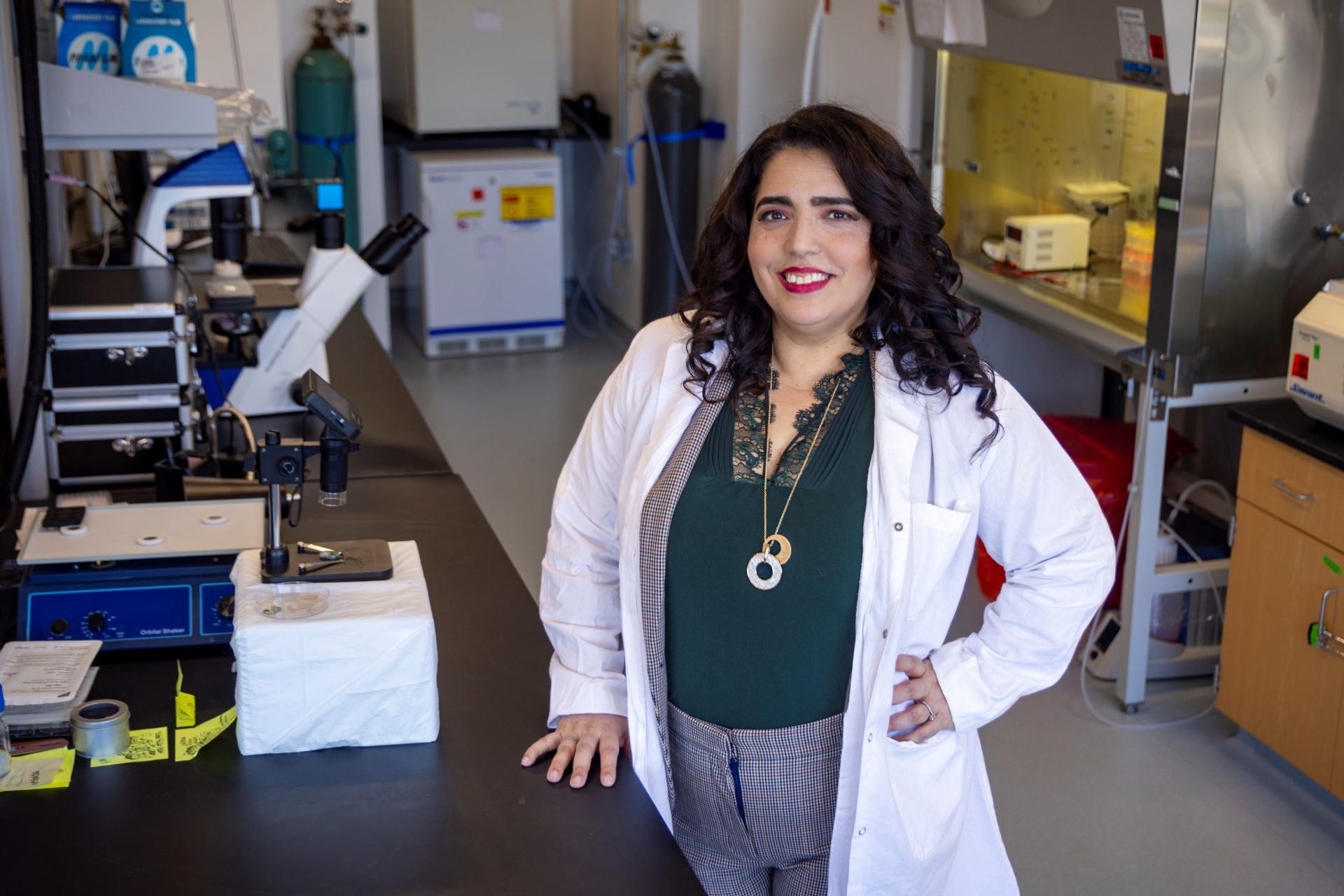

What makes these proteins so evasive is that they never settle into one shape. With no stable pocket for a drug to grip, they have long evaded conventional drug design, earning the label “undruggable.” IMPEDE seeks to counter that with a combination of laboratory experiments, computer simulation and artificial intelligence, working to pinpoint what flips a protein from healthy to disease-causing.
The team will tackle three questions that remain unanswered: where on such a dynamic protein a drug could bind, when that fleeting site is open, and how fast a compound must act before it closes again. The goal, in Freeman’s words, is to “make the undruggable druggable.”
IMPEDE is new, but the expertise driving it is not. Freeman’s lab has spent years studying how amyloid proteins drive Alzheimer’s, work that drew news coverage for its fresh read on the disease’s earliest stages. In parallel, her team has challenged the assumption that pulmonary fibrosis cannot be reversed and is pursuing a novel approach to the devastating lung disease. IMPEDE draws those two threads together under one larger mission.
The IMPEDE consortium, with Ronit Freeman as principal investigator, reaches across seven institutions: UNC-Chapel Hill, Emory University, the University of California San Diego, the University of Copenhagen, the University of Michigan, the University of Texas at Austin and UNSW Sydney, plus Siemens Healthineers. In all, roughly 100 researchers will contribute to a team spanning the United States, Denmark and Australia. Pairing a brain disease with lung disease leans on Carolina’s combined strengths in both.
At UNC-Chapel Hill, Freeman is joined by colleagues bringing tools to find, test, and validate drug candidates: Gwenn Garden, MD, PhD, chair of the Department of Neurology and Co-Director of the Duke-UNC Alzheimer’s Disease Research Center (ADRC), Scott Randell, PhD, professor of medicine in the Division of Pulmonary Diseases and Critical Care Medicine, who directs UNC’s Airway BioCore, Alexander Tropsha, PhD, K.H. Lee Distinguished Professor at the UNC Eshelman School of Pharmacy, whose lab develops AI methods for drug design; Albert Bowers, PhD, professor of chemical biology and medicinal chemistry at the pharmacy school, who discovers new peptide-based drugs; and Whitney Stutts, PhD, research associate professor of pharmacology, who directs UNC’s Metabolomics and Proteomics Core.
ARPA-H runs on a different clock than most funders, backing high-risk, high-reward bets through fast-moving, milestone-driven partnerships that pull together academia, industry and government. Even by that standard, IMPEDE’s targets are aggressive. Within four years, the team intends to:
Discoveries like these usually take a decade or more. The aim to compress that to four years, from decoding protein behavior to an FDA submission, reflects both the urgency of the need and the team’s confidence in its approach. The payoff could be transformative: from cleaning up after these diseases to heading them off before they start.
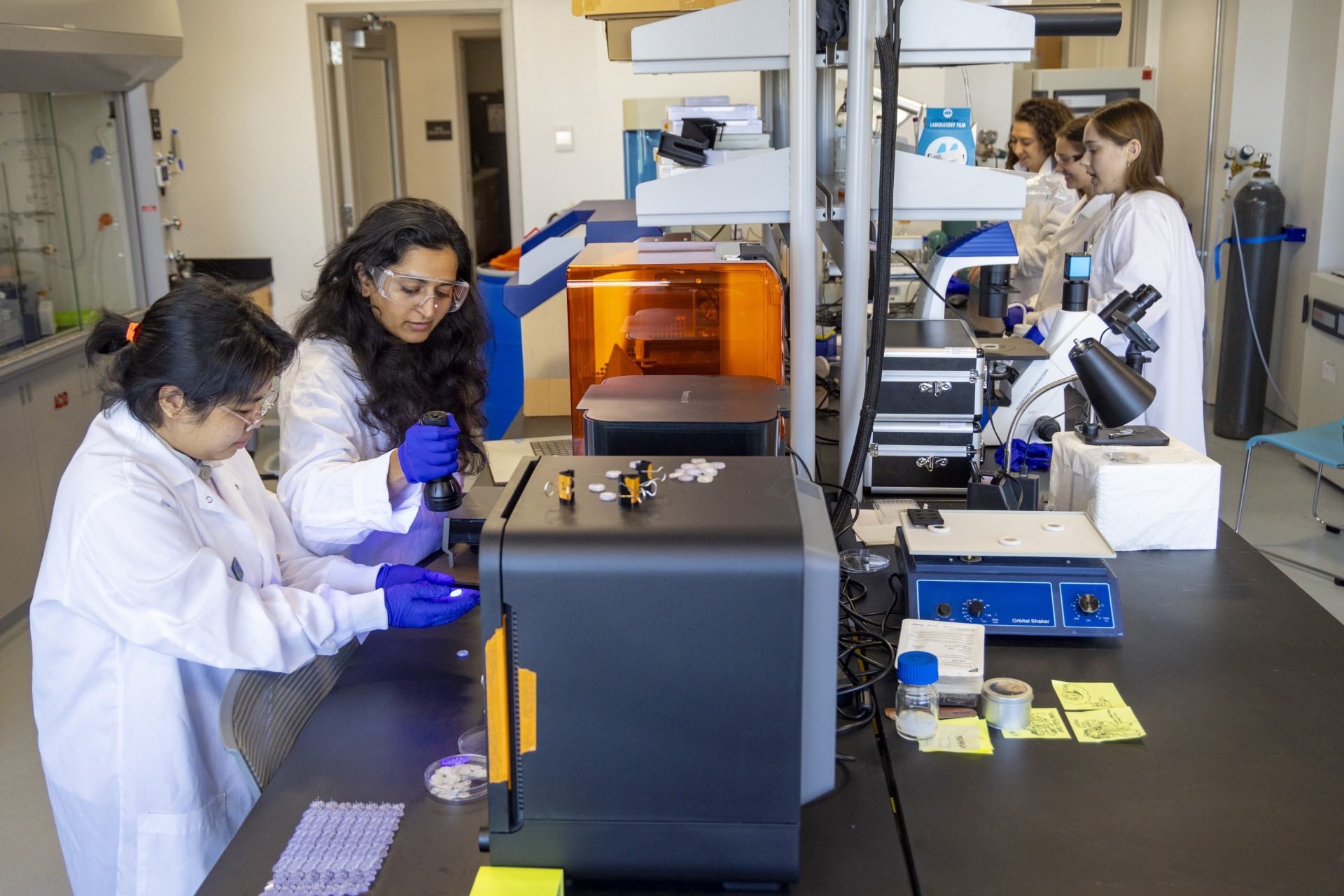
The award caps a remarkably fast path from idea to launch. ARPA-H unveiled BIOGAMI in January 2026, and in a matter of weeks Freeman assembled a multi-institution, multi-disciplinary team, secured an industry partner and led the team in developing a bold plan to find and fix protein misfolding before it damages cells. Support from across UNC-Chapel Hill helped make the award possible: the Freeman Lab and applied physical sciences department team, all pre-award administration across the University, the Office of the Vice Chancellor for Research, Office of Sponsored Programs, and all pre-award teams at IMPEDE consortium university partners.
“Ronit is a rockstar—both in the lab and in person. When we met with Siemens Healthineers leadership in Germany she was the star of the show,” said Tommy Sowers, PhD, vice chancellor for innovation, entrepreneurship and economic development and chief innovation officer at UNC-Chapel Hill. “Her research is everything Carolina: collaborative, creative and most importantly impactful for citizens of North Carolina and beyond.”
Siemens Healthineers, which has a significant presence in North Carolina’s Research Triangle region, brings expertise essential to moving a biomarker from the laboratory toward the clinic.
“Siemens Healthineers is contributing industry-leading immunoassay development capabilities that have delivered novel, automated assays in support of patient care at scale,” said Gaby Marquardt, head of clinical innovation and technology, Diagnostics, Siemens Healthineers. “Our integrated technical modalities — laboratory testing, in vivo imaging, and healthcare AI — complement the research assets of our academic partners in our collective pursuit to benefit patients and specialist clinicians by enabling earlier and more informed patient care decisions.”
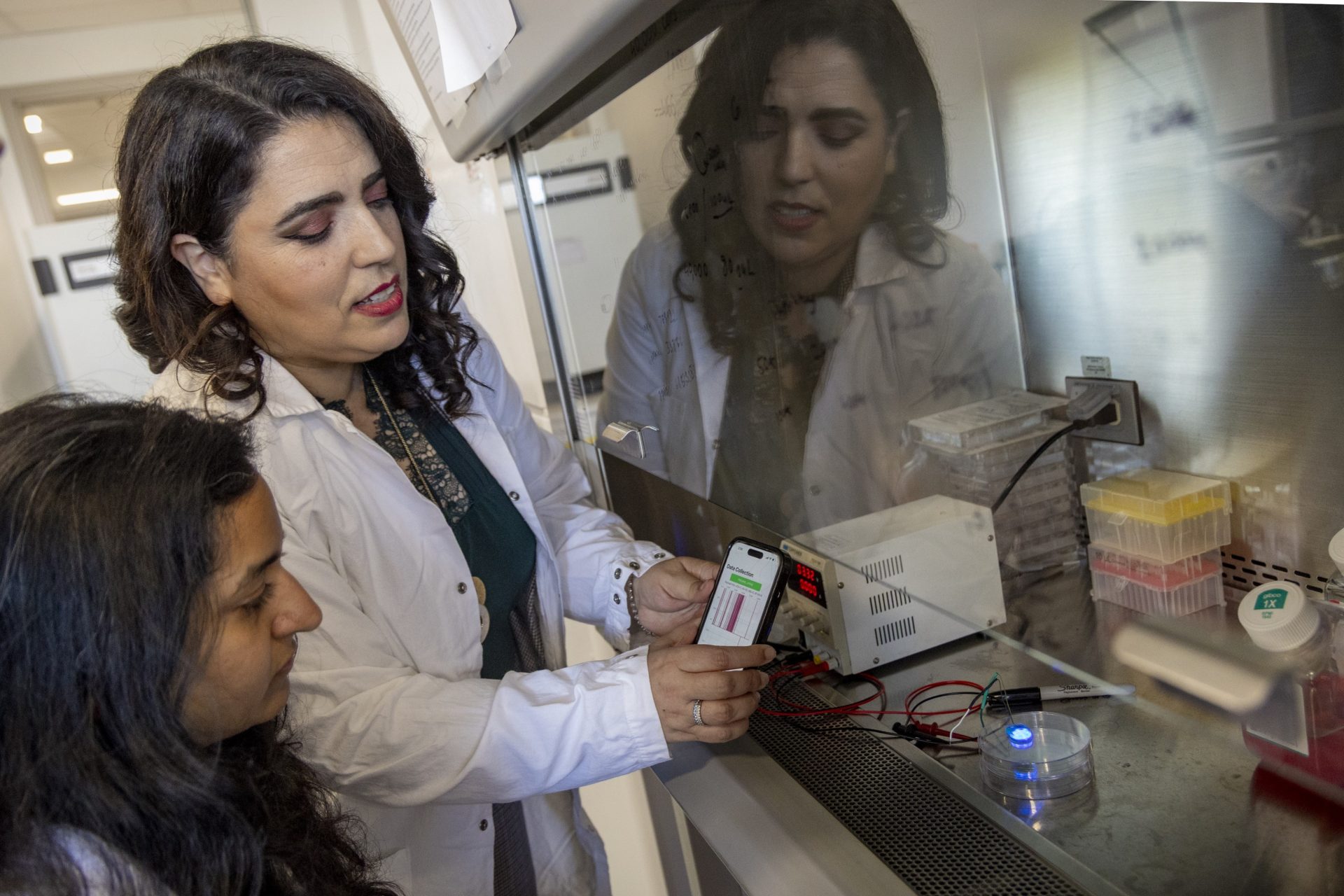
The effort also taps a dense regional innovation network. Freeman’s push to develop a novel pulmonary fibrosis therapy has drawn financial backing from NC Innovation, Eshelman Innovation, and the Harrington Discovery Institute located at University Hospitals in Cleveland. She has worked with UNC-Chapel Hill’s Innovate Carolina team to advance that venture through its KickStart Advisory Group and Office of Technology Commercialization, which help guide discoveries like hers toward real-world use. Projects of this scale tend to seed new jobs, new companies and better patient care across the state and beyond.
“This consortium shows what’s possible when biomaterial design, clinical expertise and computational power converge around a single goal: catching neurodegenerative and other diseases earlier and giving people living with these diseases a different future,” said Penny Gordon-Larsen, PhD, vice chancellor for research at UNC-Chapel Hill.
 | UNC-CH