Six standout student ventures at UNC-Chapel Hill took the stage—and took home nearly $100,000—in the Luby Pitch Competition, a high-stakes event propelled by philanthropy, leading-edge AI and digital tech applications, and the next generation of Tar Heel entrepreneurs.
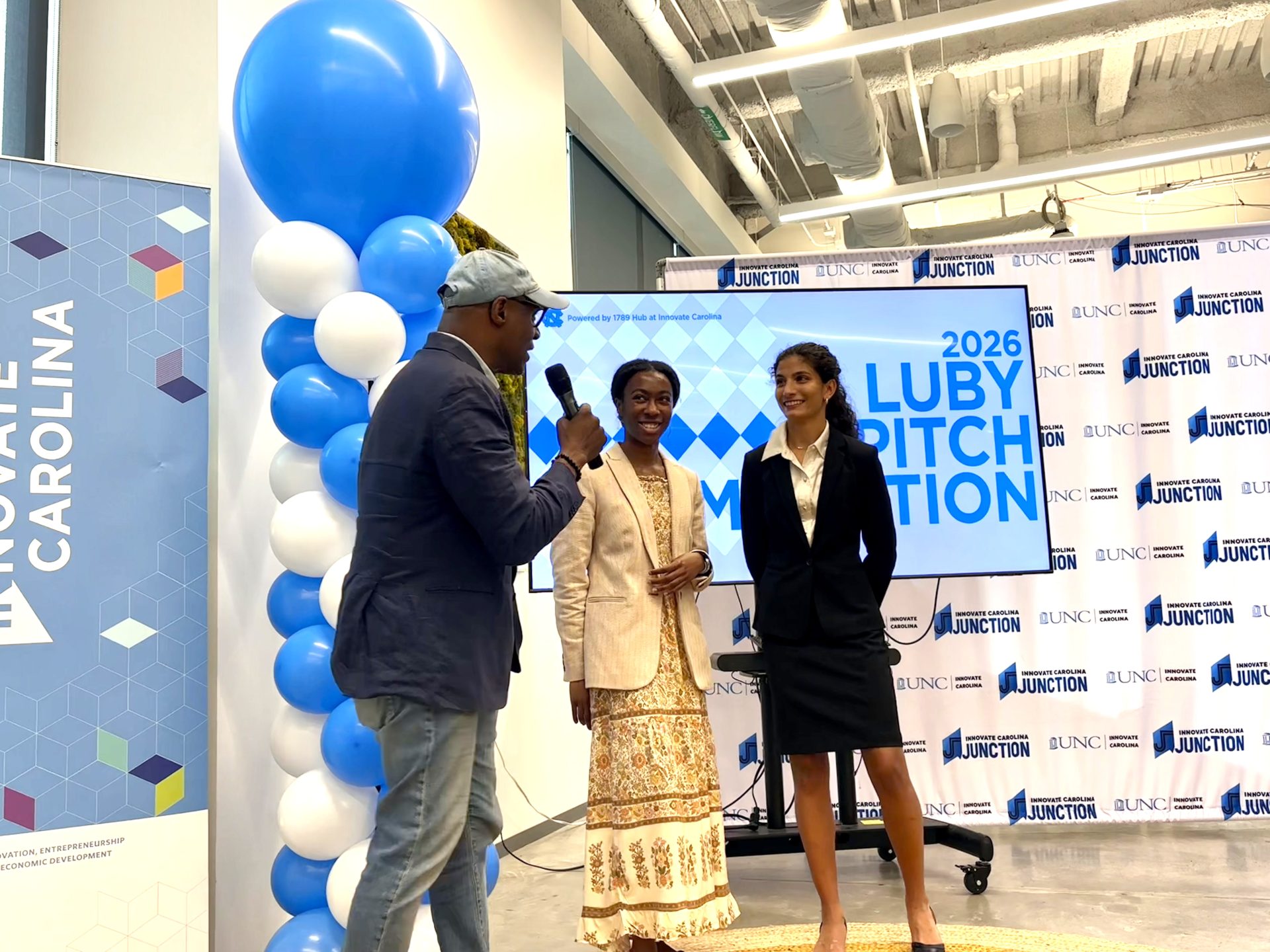
Vrutika Soneji said it all in a single word. As she walked down the stairs to center stage, Soneji and her co-founders received a massive cardboard cutout of a check. She and her team had just won a $25,000 prize when event emcee Bernard Bell from the Shuford Program in Entrepreneurship asked her a question: “What do you plan to do in the future?” Soneji’s quick quip spoke volumes. “This,” she said.
Soneji’s company—Sensible—was one of the top-six most promising student startups at the University of North Carolina at Chapel Hill invited to compete during the Joan and Chester Luby Pitch Competition. The competition is one of the University’s most anticipated entrepreneurial events. As her response indicated, student founders at this event see the companies and products they pitch as anything but academic fancies. They view them as real businesses that they intend to build and grow.
Innovate Carolina, the University’s initiative for innovation, entrepreneurship and economic development, hosted the competition at the Innovate Carolina Junction, an innovation hub and coworking space in downtown Chapel Hill. Now in its third year, the competition has quickly established itself as a defining moment for student founders. More than a pitch event, it represents the culmination of a yearlong journey—one that begins with early-stage ideas and advances through mentorship, early seed dollars, and rigorous evaluation. By the time students arrive at the live showcase, they’re working on ventures with real potential to make an impact.
At the center of that journey is the Joan and Chester Luby Charitable Trust, whose three-year, $300,000 commitment has made the competition possible since 2024. As the event in late April 2026 marked the final year of this funding cycle, it underscored the lasting role philanthropy plays in shaping innovation at Carolina.
Over its first two years, the competition had already demonstrated measurable impact. Nearly $200,000 in funding had been awarded to 16 student startups. In turn, those ventures raised more than $819,000 in total funding—more than four times the amount awarded through the competition itself.
This year, Innovate Carolina awarded nearly another $100,000 to four of the six finalists, continuing a cycle in which early investment fuels entrepreneurial momentum. For student founders, that support can mean the difference between an idea that remains conceptual and one that becomes a viable company, product or service.
“This isn’t just about winning a pitch. It’s about building what comes next,” said Tommy Sowers, PhD, chief innovation officer and vice chancellor for innovation, entrepreneurship and economic development at UNC-Chapel Hill.
The path to the Luby stage was intentionally rigorous. All 36 student startups that received funding through the 1789 Student Venture Fund during the 2025-26 academic year—18 winners in the fall semester and 18 winners in the spring semester—were automatically considered for the competition.
From there, Innovate Carolina invited the 12 top teams whose applications scored highest during the two student venture fund cycles to submit video pitches for the Luby Pitch Competition. A panel of judges evaluated those submissions to narrow the field to six finalists.
Multiple finalists are working on preventative health care. They’re using data and technology to improve early detection and patient outcomes. Some students are building platform-based business models that streamline fragmented markets. And others are applying AI and automation to solve operational challenges in industries ranging from rehabilitation to senior living.
Judges participating in the live-pitch finals included entrepreneurial leaders from Chapel Hill and the wider Research Triangle region:
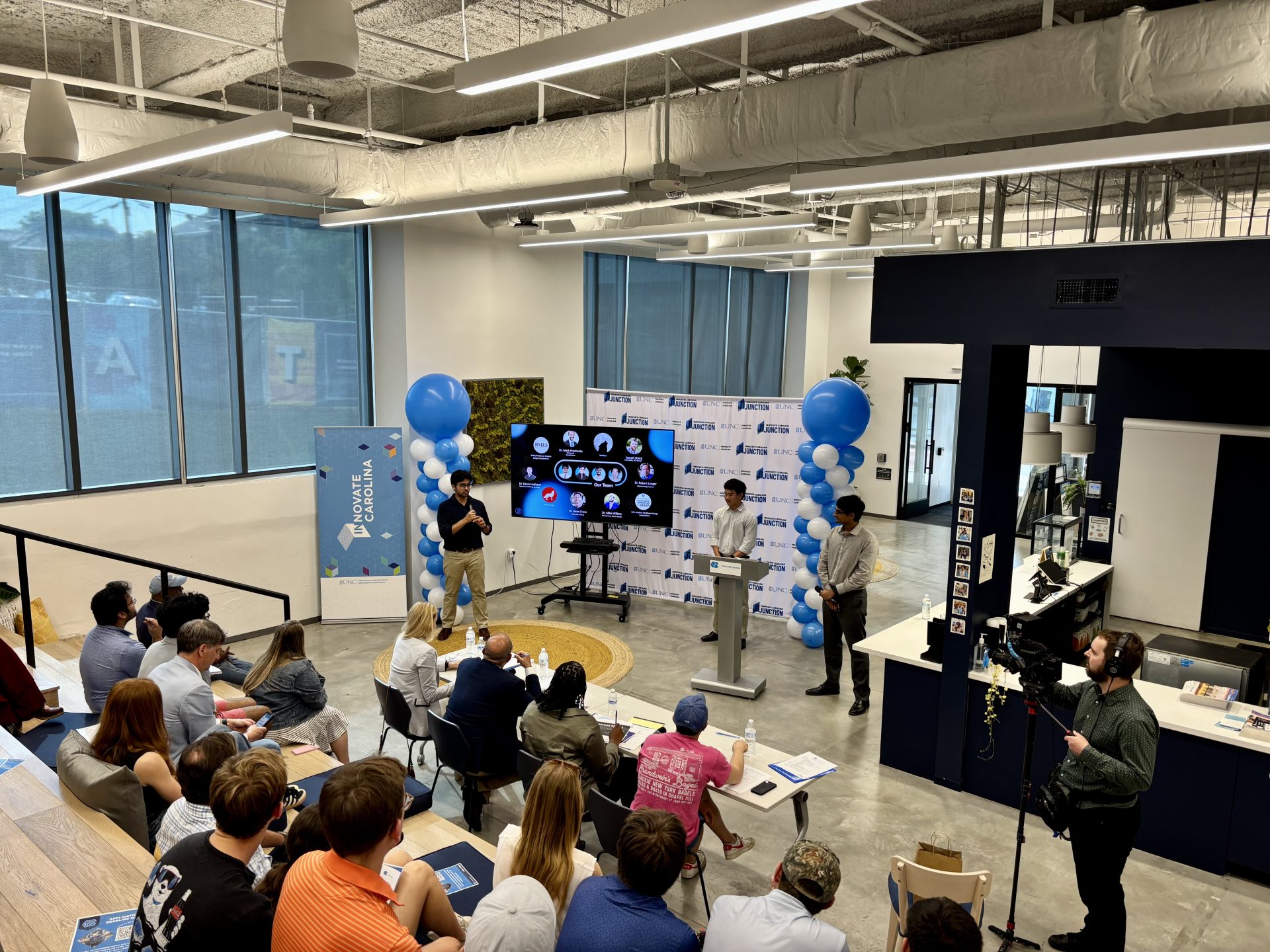
Beyond the funding and live event, the experience of preparing for and competing in the competition pushes students to refine their business models, sharpen their storytelling and engage with real-world expectations.
“We are incredibly grateful to the Joan and Chester Luby Charitable Trust for its continued support of student startup founders over the past three years,” said Kimi Yingling, assistant director of innovation hubs at Innovate Carolina. “All six of this year’s finalist teams have demonstrated ingenuity, discipline and progress. The competition and funding help prepare these students to become the next generation of business builders.”
At the conclusion of the competition, the judges ranked the top three teams and the audience voted to select a Viewer’s Choice winner:
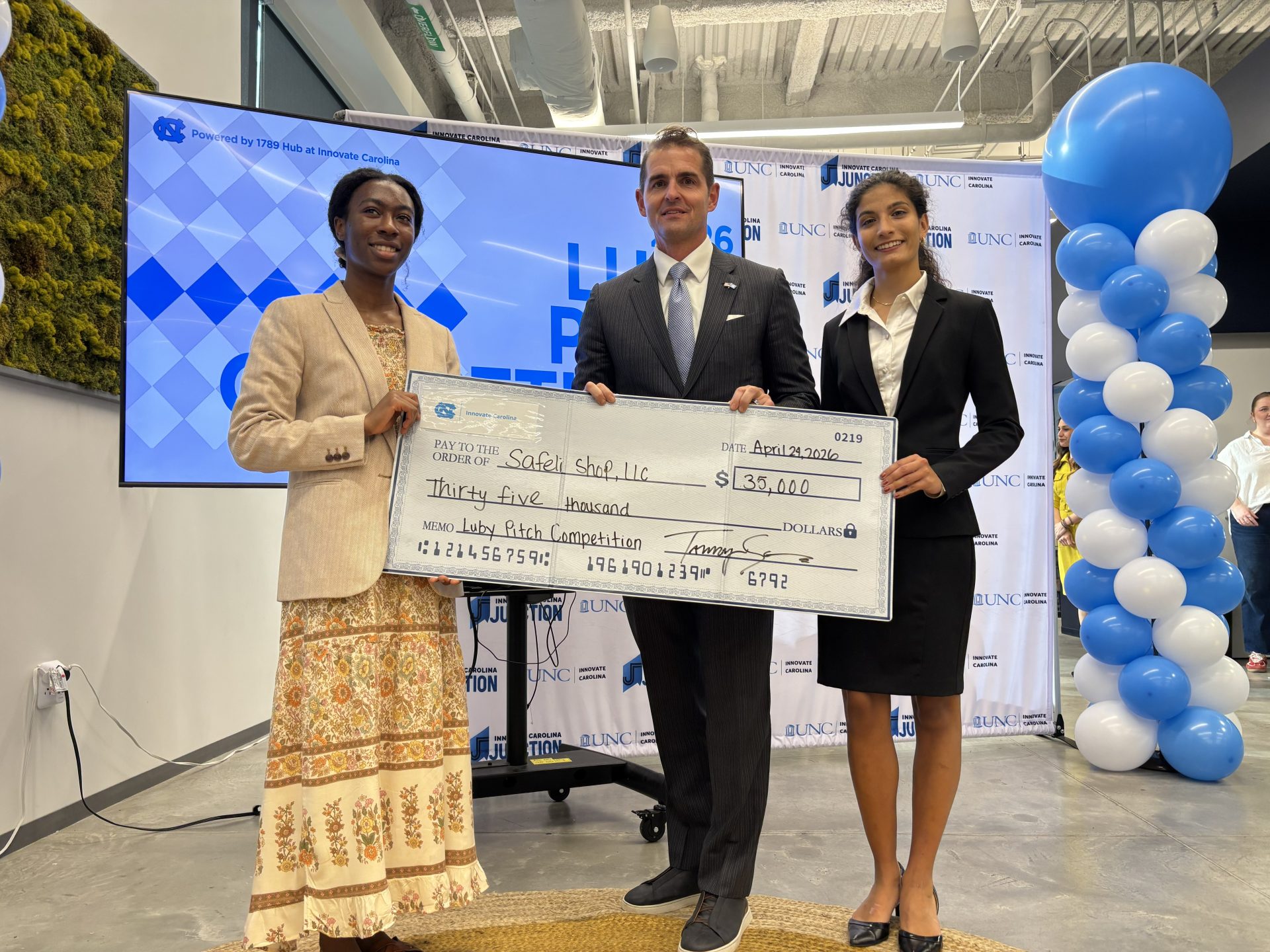

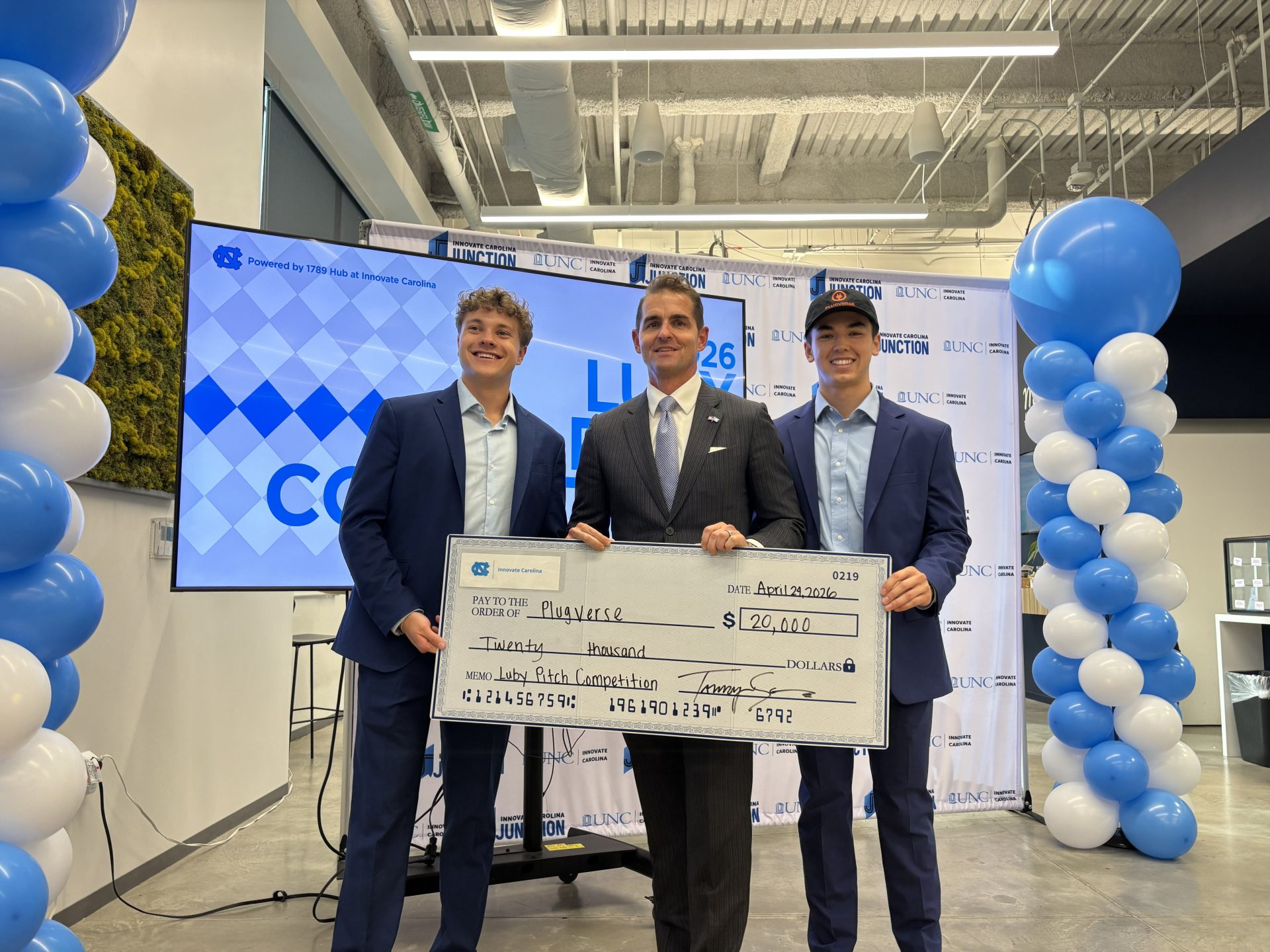
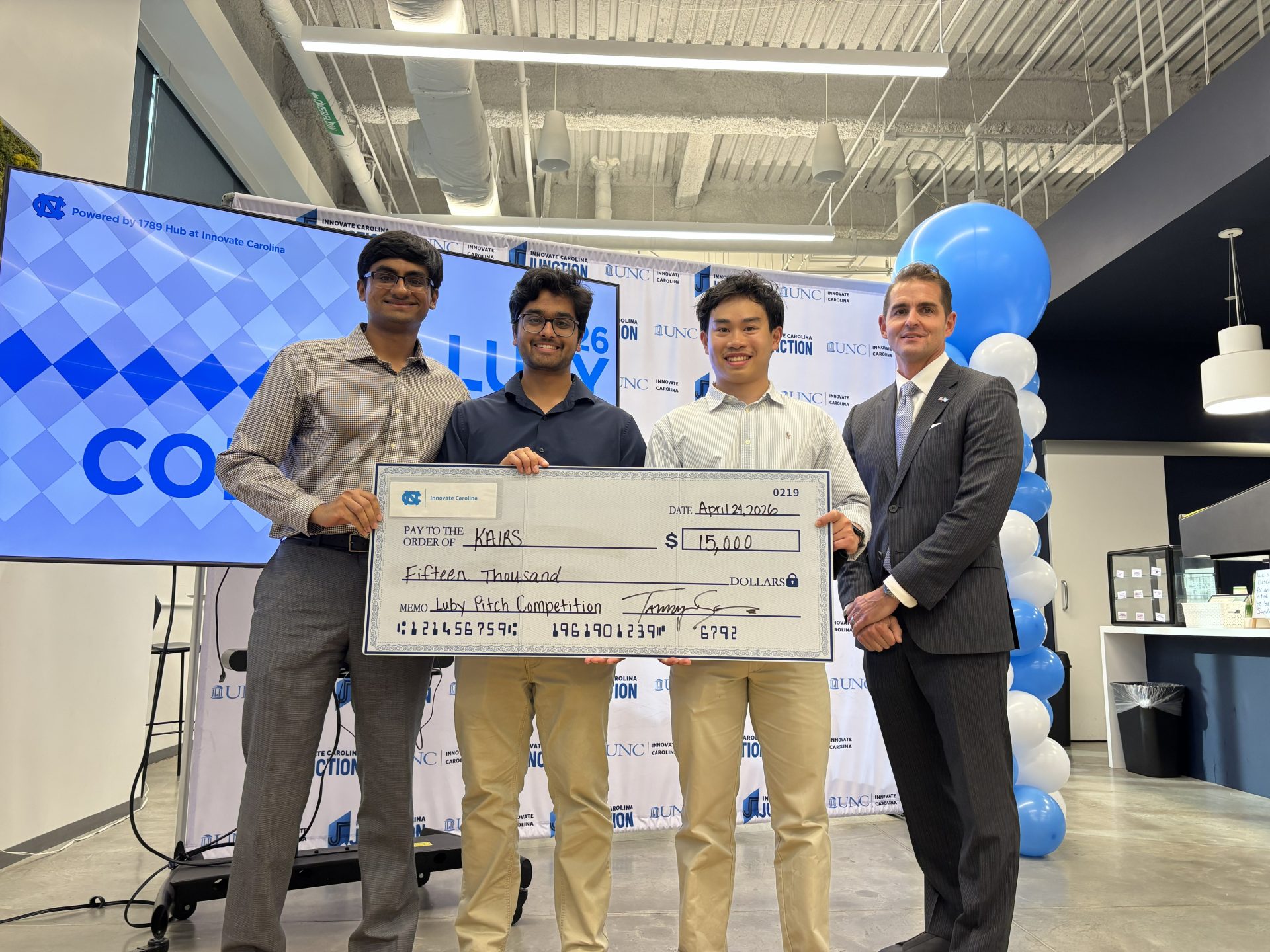
For the students taking the stage, the Luby Pitch Competition represents both a milestone and a launchpad. The funding and exposure gained through the event can accelerate product development, support market entry and open doors to future investment. Student winners also receive time-limited memberships to the Junction coworking space, where they can convene to work on their companies.
“Our next steps are to finalize our minimal viable product and get our device into local physical therapy clinics,” said Samanyu Dixit, senior a biomedical engineering and computer science student and co-founder of KAIRS, which won the viewer’s choice award. “This investment from the Luby Pitch Competition will go a long way in helping us engage in conversations and sign contracts with local clinics so that patients can start wearing our sleeve as part of their recovery.”
“Right now, we’re in the deployment process, and our app is going to be on the Apple App Store and on Google Play soon,” said Neriah Friday, the co-founder of first-place finisher Safeli Shop who is pursuing a master’s degree in information science. “Our next steps are to launch here at UNC and build a strong user base at the University.”
 | UNC-CH